Sewing with Fire

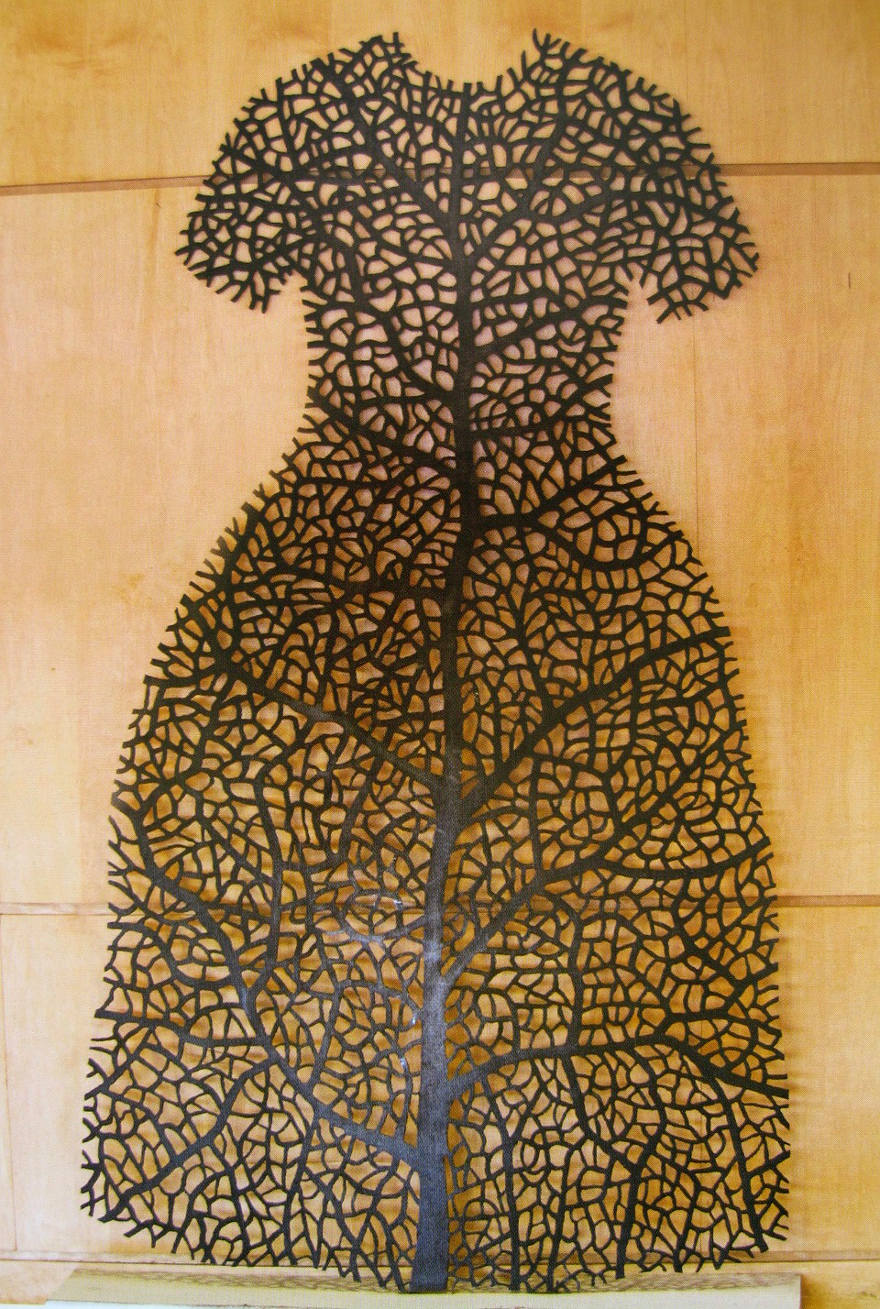
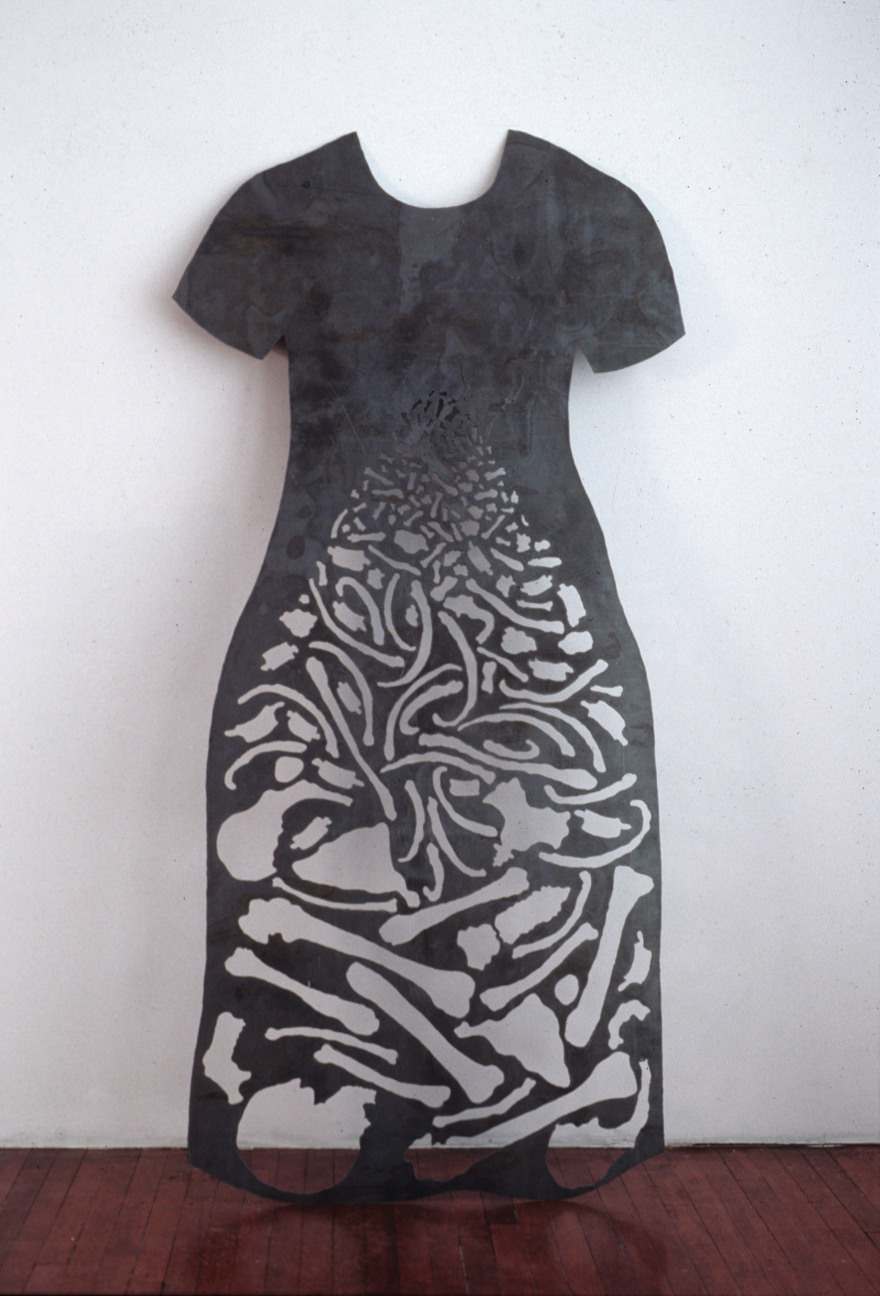
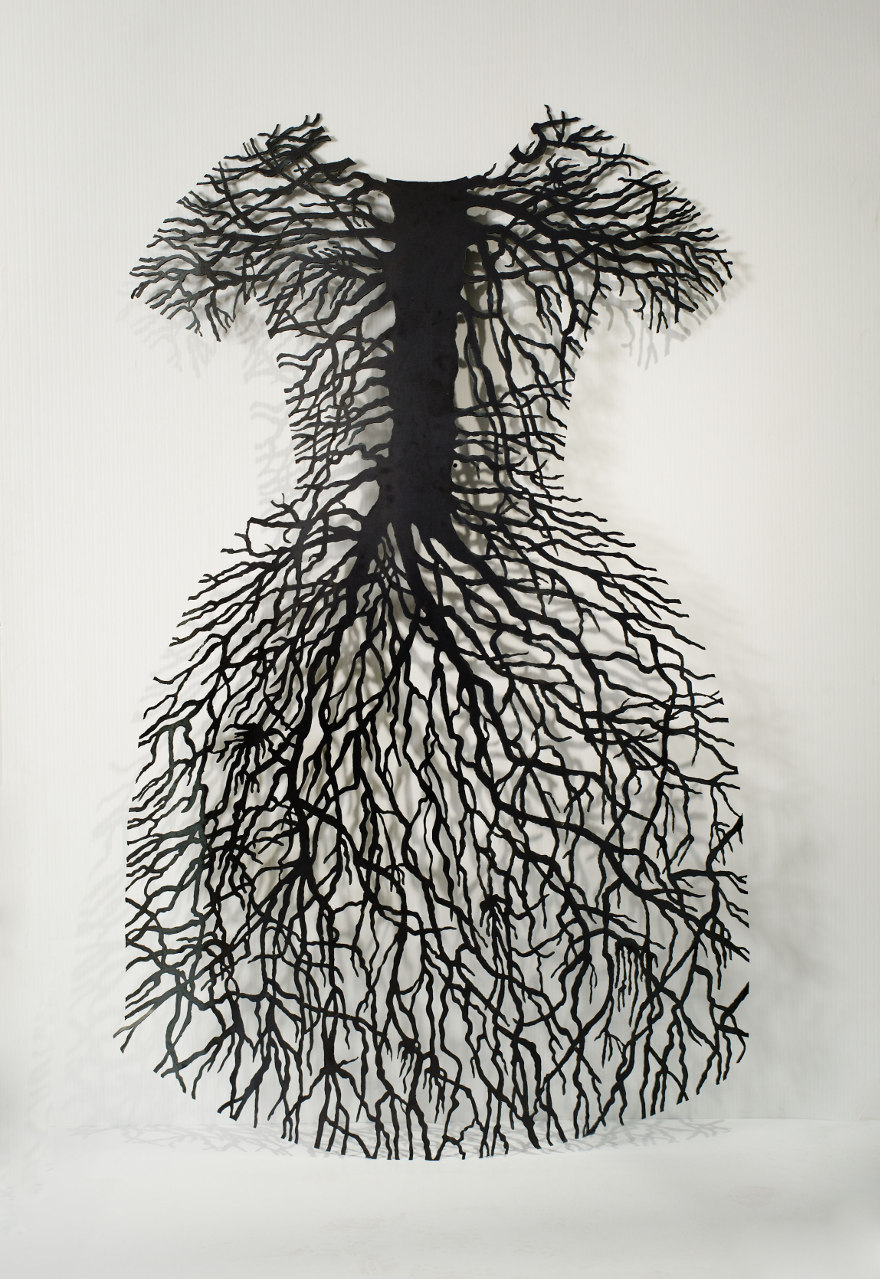
Root Dress, plasma-arc cut steel, 203 x 114 cm, 1995
Collection Winnipeg Art Gallery

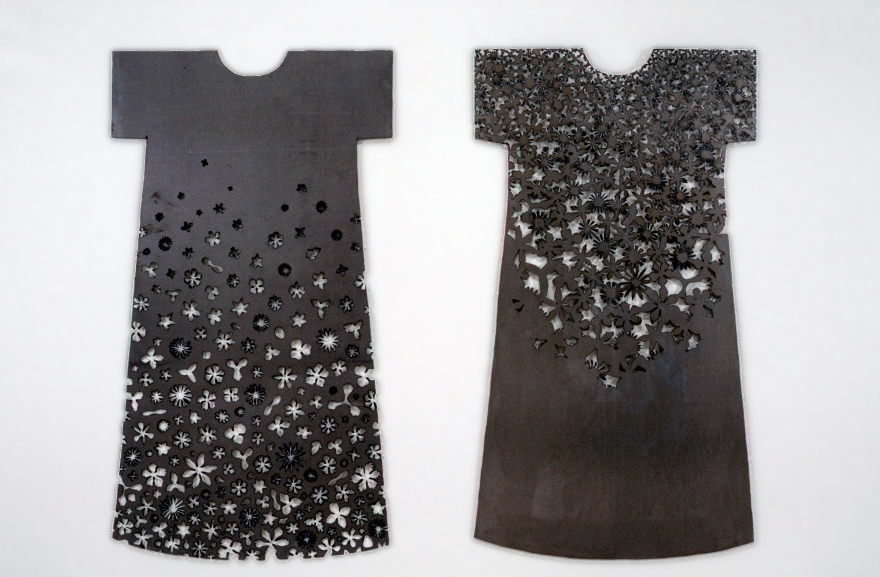
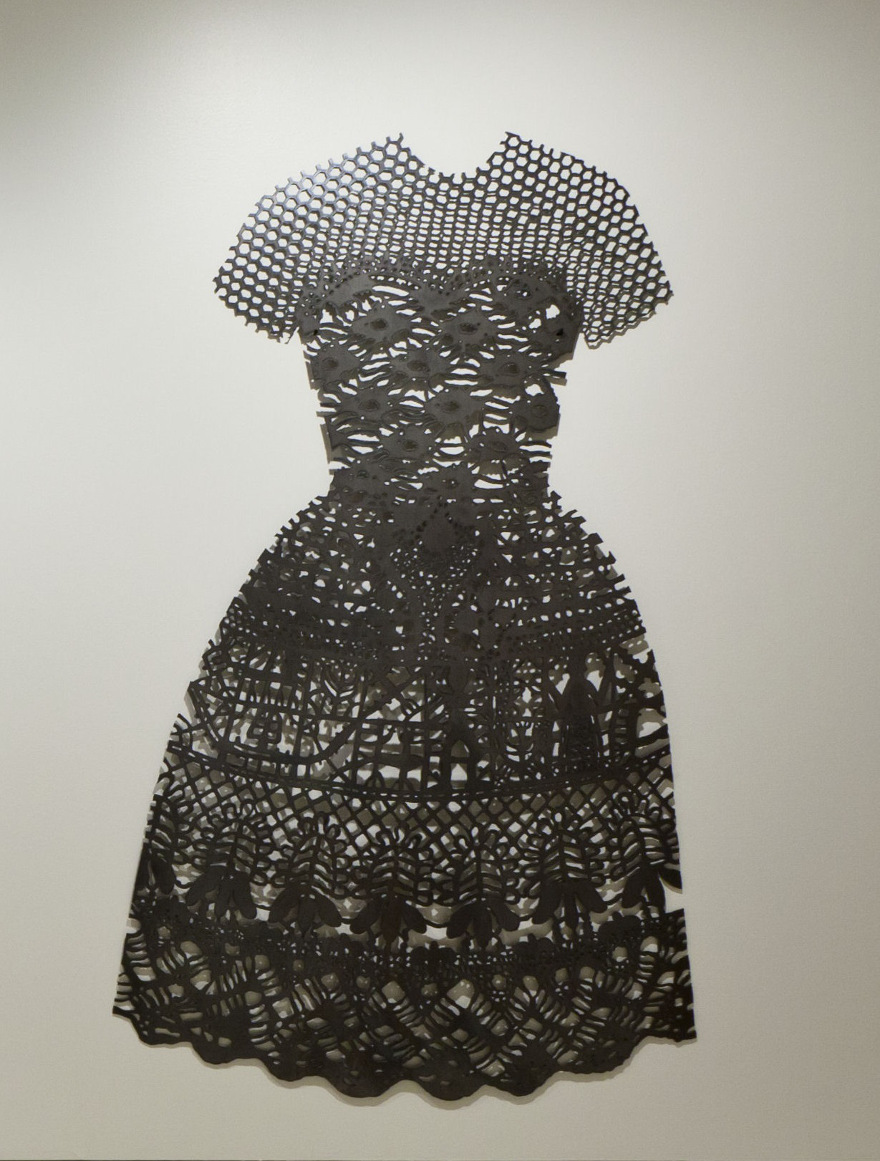
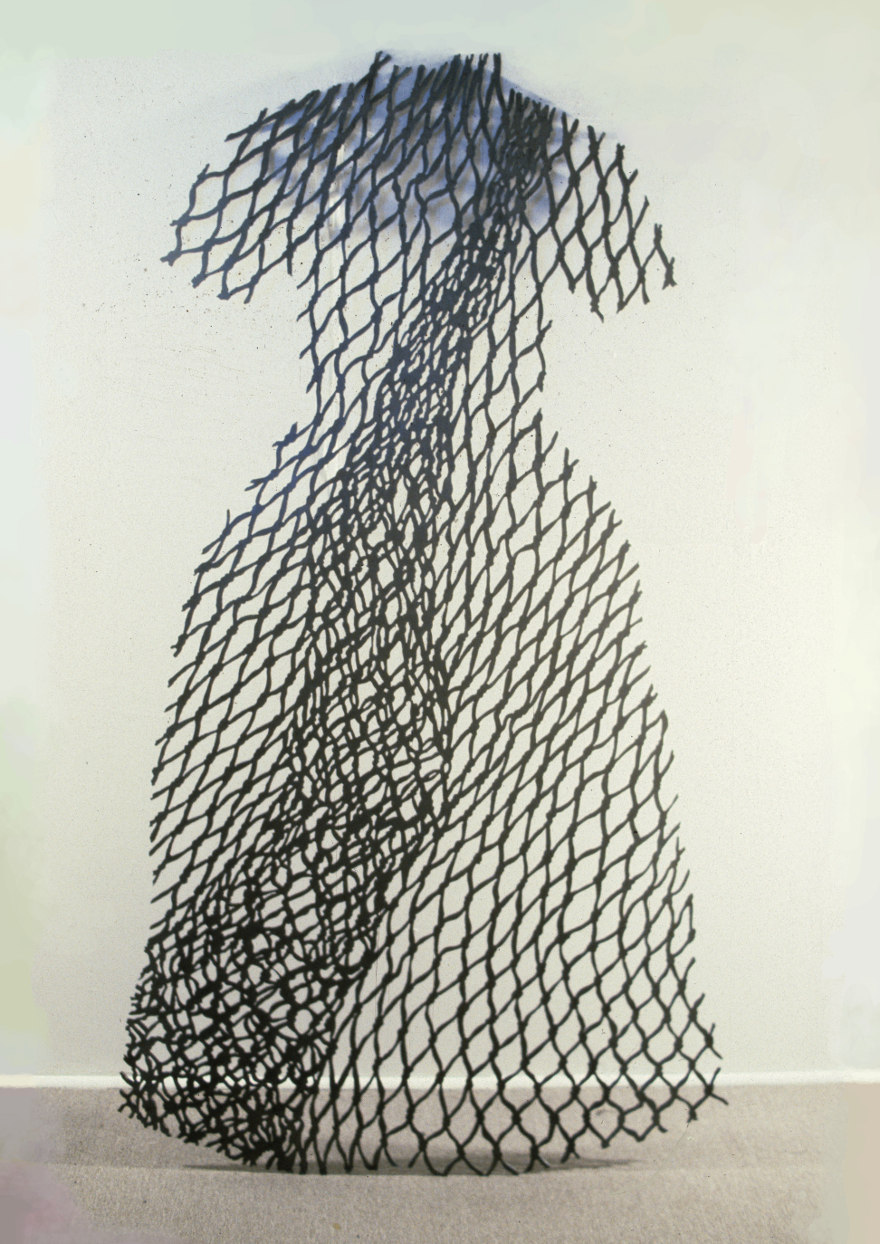
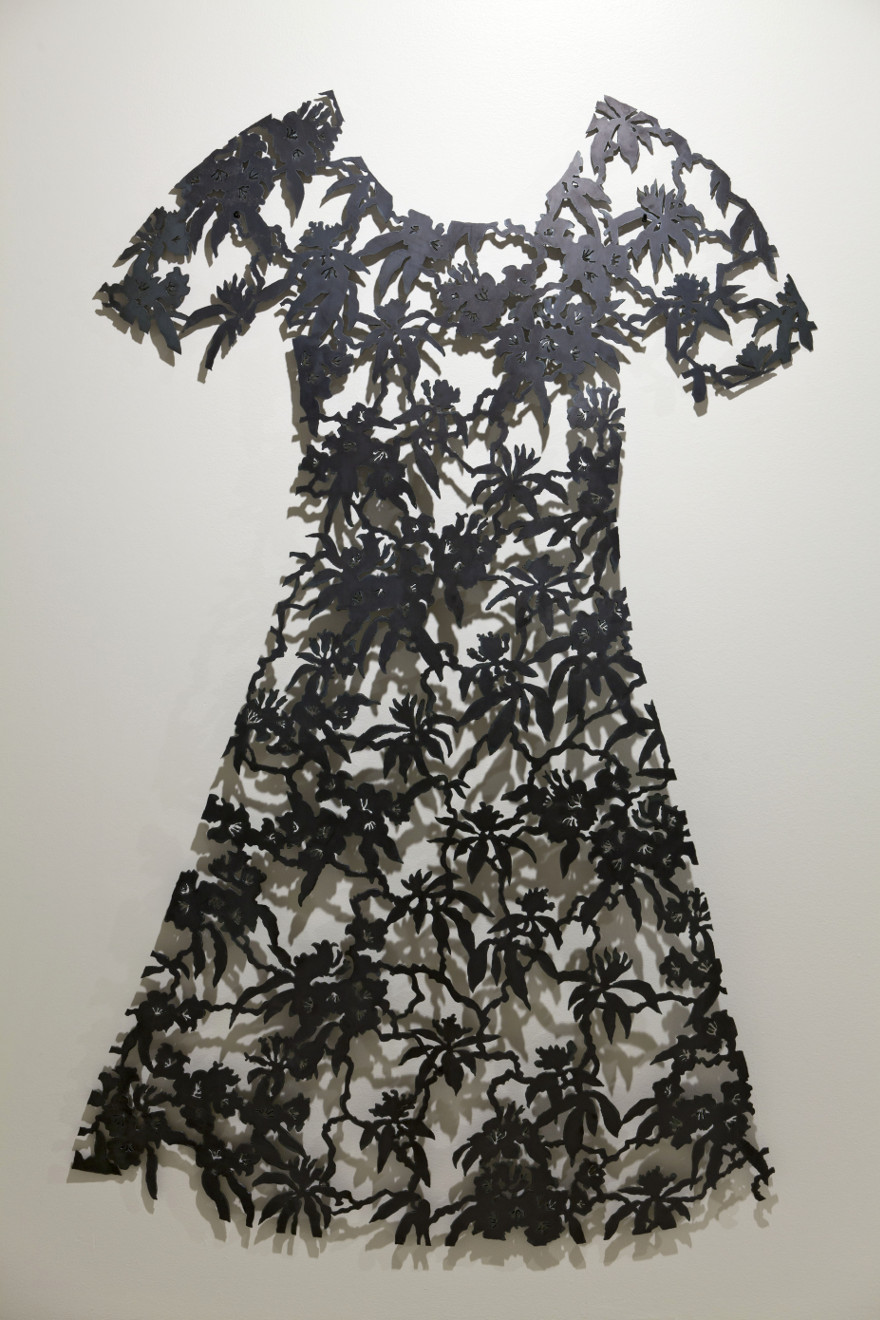
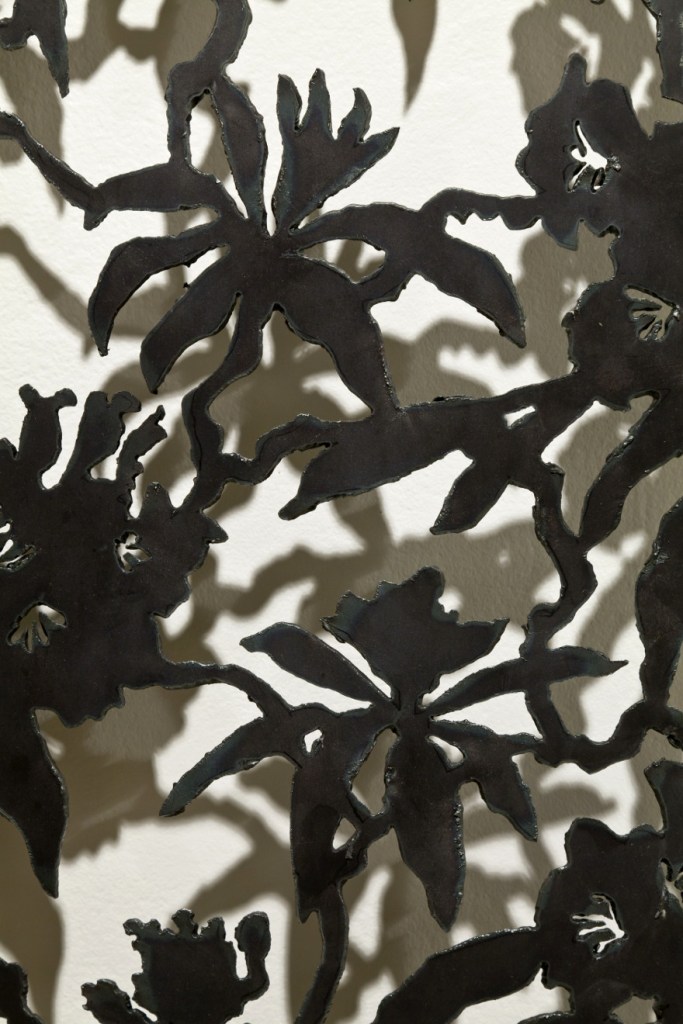
When I was young I made my own clothes, and later worked in a clothing factory to save money for art school. My work as a textile pattern designer in Montreal influenced the imagery in these steel dresses, which I created to express the strength and diversity of women. Using a plasma-arc cutter, I created patterns based on forms historically associated with women. In this work I interweave correlations between material, image, and content to present alternative visions of gender. Feminism supports domestic activities as a valid approach to contemporary art practice, so I consider making these steel dresses as “sewing with fire.”
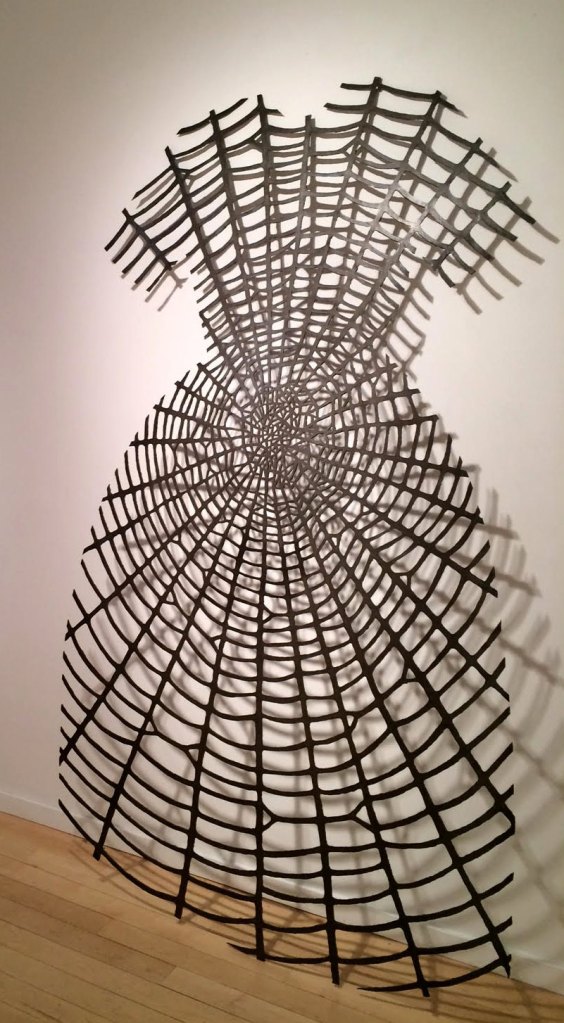
Arachne, plasma-arc cut steel, 220 x 126 cm, 1995
Collection Royal Ontario Museum
Heart’s-Ease, plasma-arc cut steel, 225 x 120 cm each, 2000
Collection The Rooms Art Gallery
Heart’s-Ease, detail
Lace Dress, plasma-arc cut steel, 210 x 110 cm, 2000
Leaf Dress, plasma-arc cut steel, 220 x 120 cm, 1996
Collection Seneca College
Maternity, plasma-arc cut steel, 200 x 95 cm, 1994
Collection Trillium
Fish Net Dress, plasma-arc cut steel, 225 x 100, 1995
Collection The Rooms Art Gallery
Orchid Dress, plasma-arc cut steel, 190 x 90 cm, 1993
Orchid Dress, detail
Thanatos, plasma-arc cut steel, 195 x 95 cm, 1995
Collection Lakehead University Orillia
Mourning

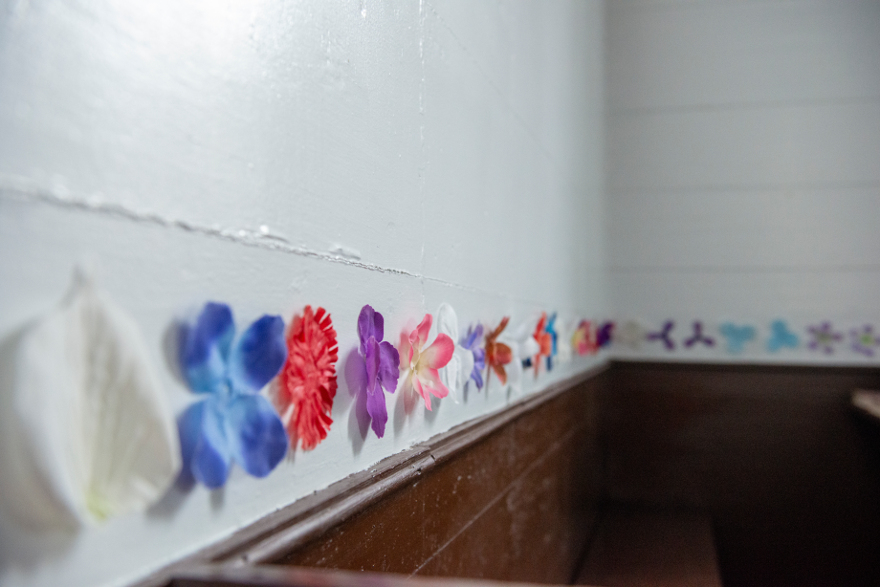
This slow loss reminds us to move, detail

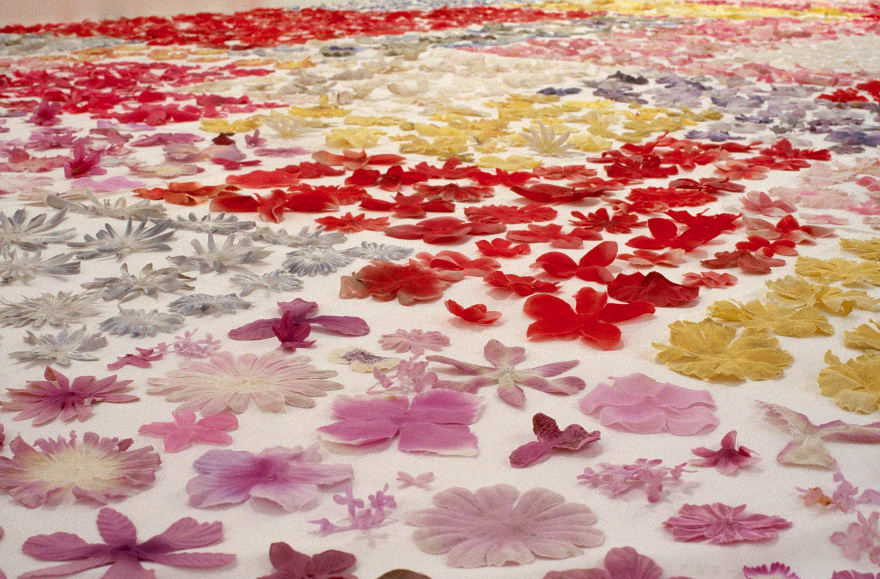
After the death of my father, I found myself involved in repetitive textile work, and knew it was my way of mourning. This labour-intensive work seems to be a common way of coping with grief and loss, as cloth has strong associations with protection and healing. Mourning is not easily manifested in contemporary society where there is little place for ritual during times of sorrow. But the slow process of textile work can provide a space for continuing conversation with the dead, creating bonds between the past and the present.
This slow loss reminds us to move (with Jane Walker, Bonavista Biennale), fabric flowers gathered from outside Newfoundland cemeteries, dimensions variable, 2017
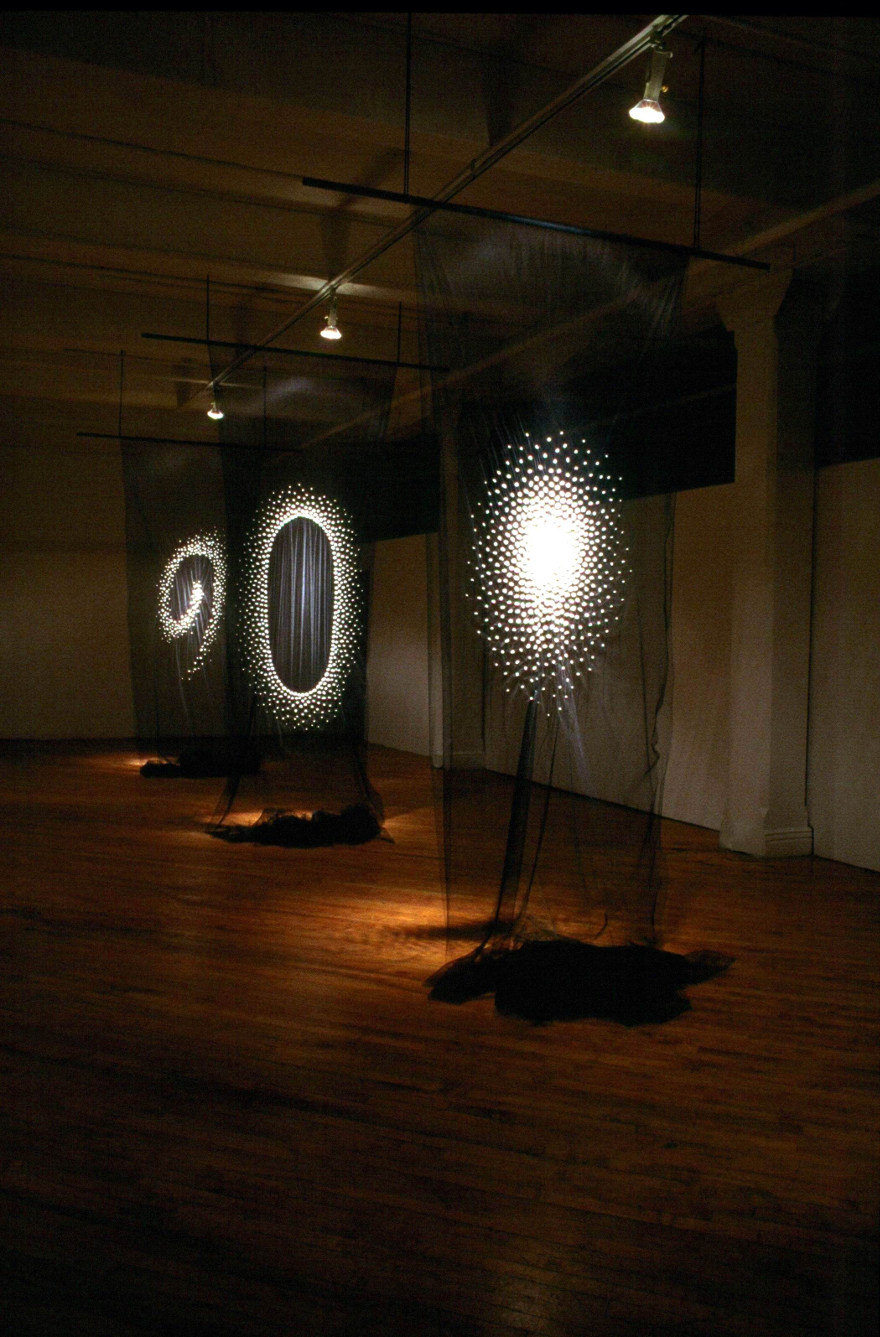
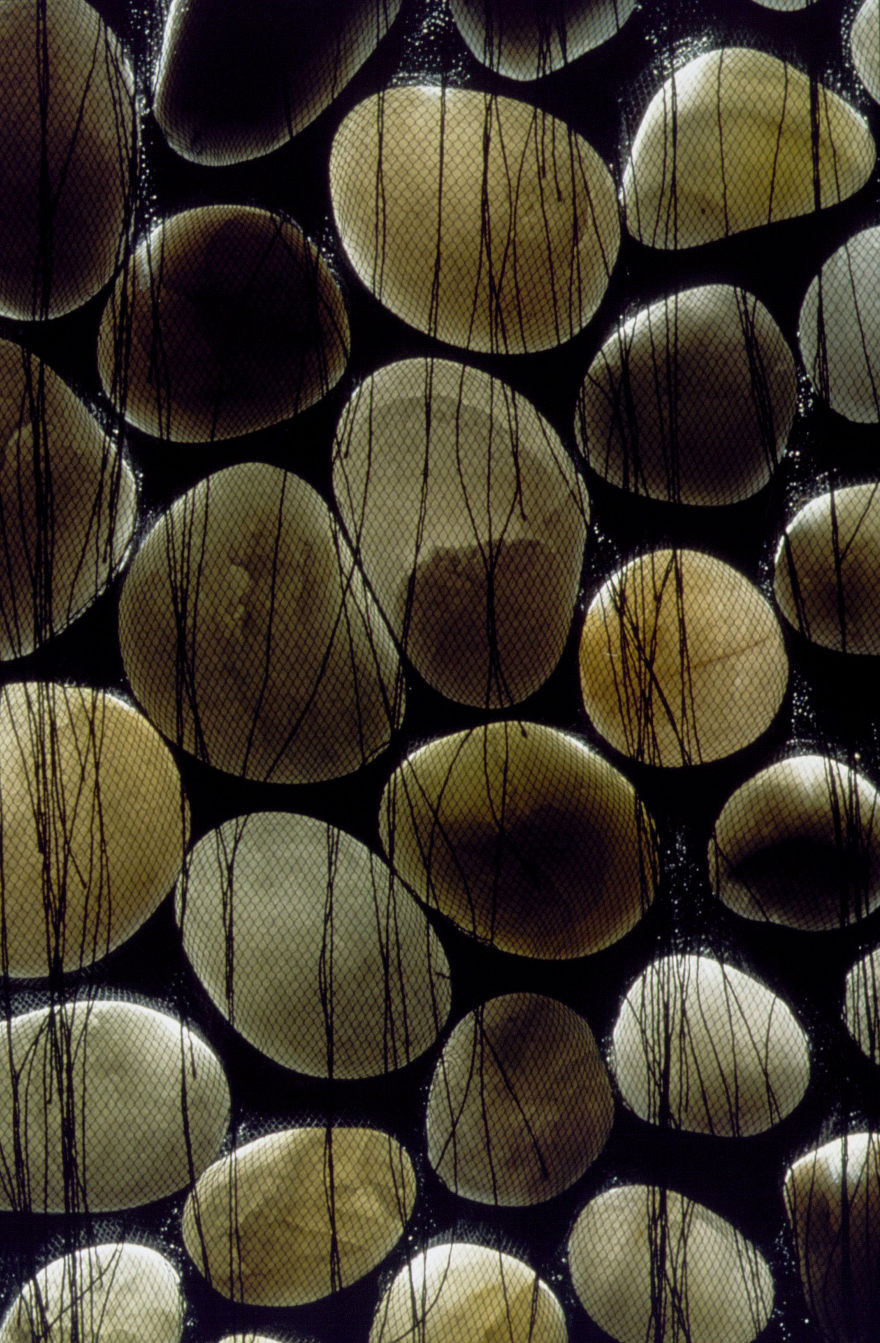
Cluster, Aureole, Nebula, sea-worn quartz stones, netting, thread, 350 x 150 cm each
Collection The Rooms Art Gallery, 1997-1999
Cluster, Aureole, Nebula, detail
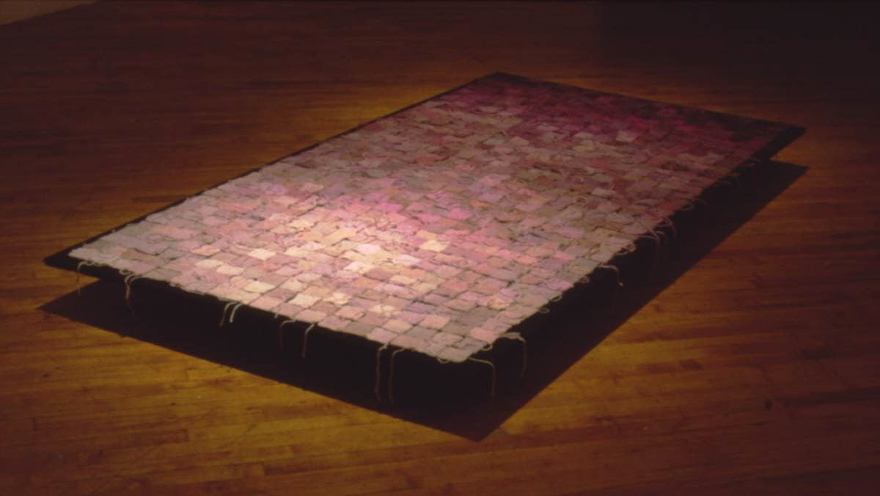
Pall, knitted yarn, 240 x 120 cm, 1996-1998
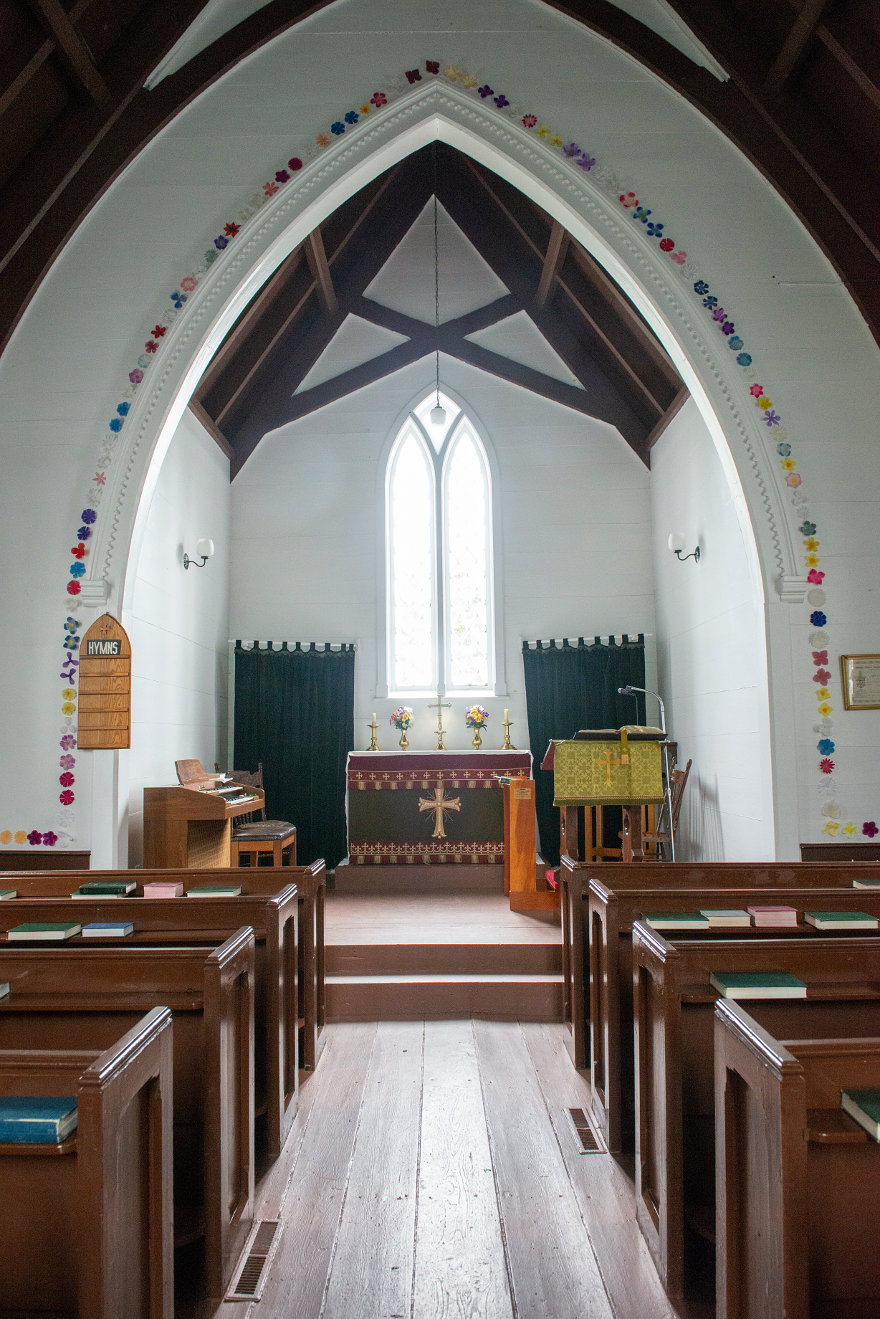
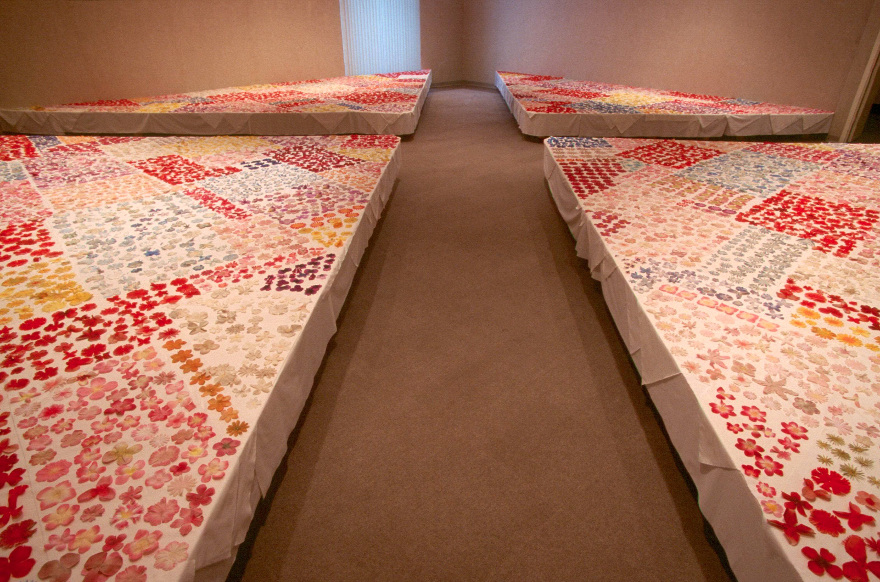
Shroud, (Newfoundland and Labrador Art Gallery), fabric flowers collected from outside cemeteries in Newfoundland, cotton, wood platform, variable site-specific installation, 2002
Shroud, detail
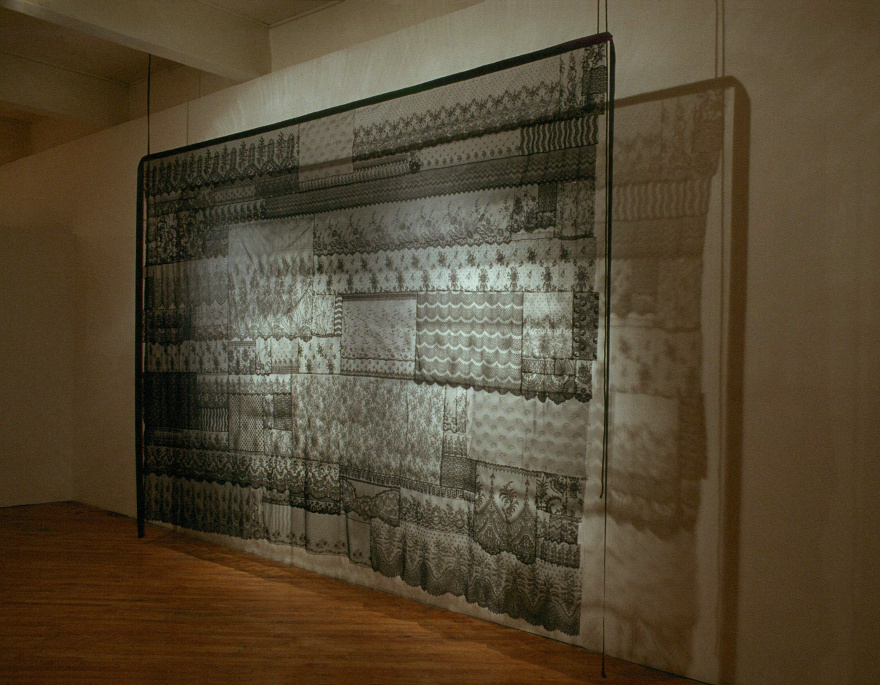
Veil, antique French lace, thread, ribbon, 290 x 450 cm
Collection The Rooms Art Gallery, 1998-1999

antipersonnel

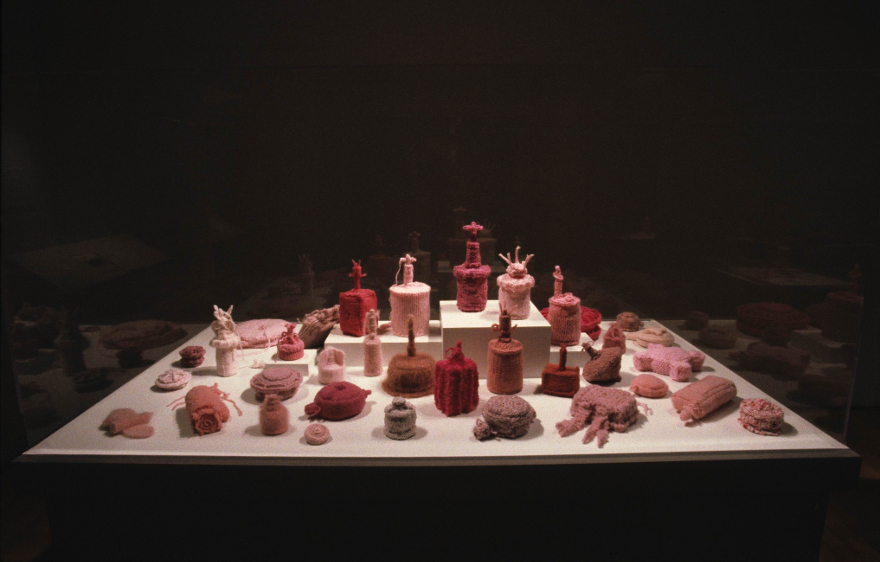
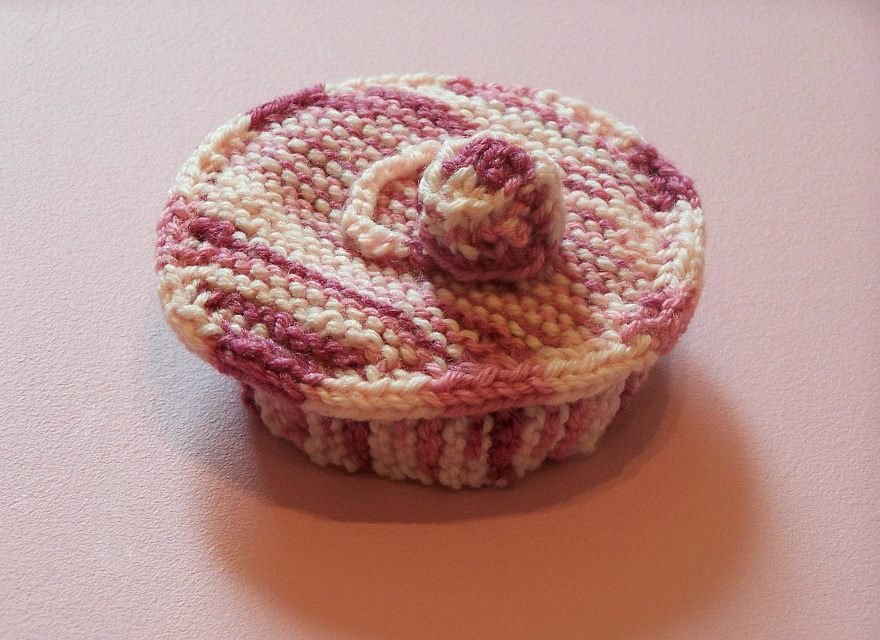
antipersonnel, knitted yarn, variable dimensions, 1998-2010
(life-size replicas of antipersonnel land mines)
Collection Agnes Etherington Art Centre, York Wilson Endowment Award, Canada Council, 2005
Collection The Rooms Art Gallery, Newfoundland and Labrador, 2012

During a Canada Council residency in Paris, I visited the Pyramid of Shoes, an annual protest against land mines, which inspired me to knit replicas of antipersonnel land mines. Knitting is closely associated with caring for the body – it was originally used to make undergarments (the origin of the sweater). Bandages for soldiers were once hand-knitted, and women still knit for soldiers, prisoners, and the homeless. Knitting represents recuperation, protection, and healing. In this work I use these associations to contradict the abuse of power through violence, transforming a destructive object into one that can do no harm.

Germany Dm-39A1, knitted yarn, 6.5 x 11.5 cm diameter, 2005
Italy VS-1.6, knitted yarn, 9 x 23 cm diameter, 2001
USSR POM-2S, knitted yarn, 16.6 x 37 cm diameter, 2000

Camouflage

Fodder, detail

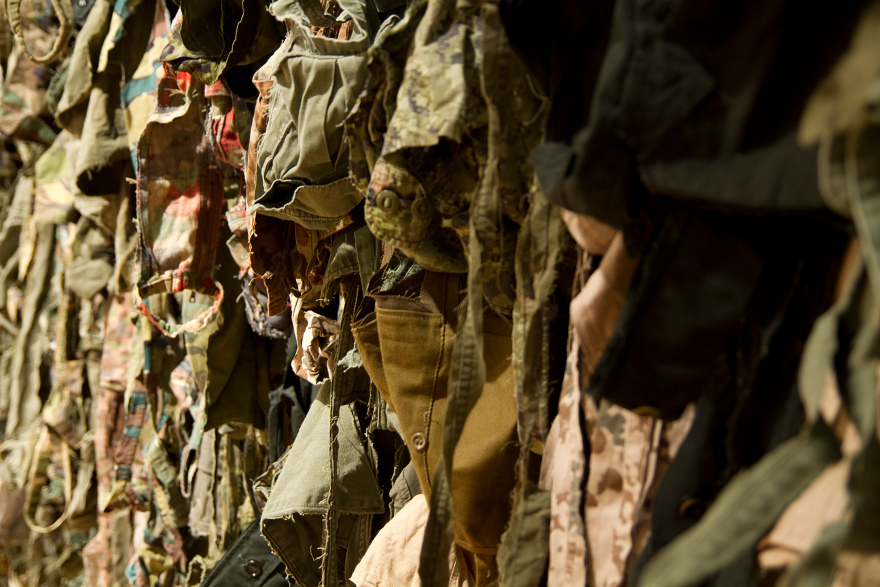
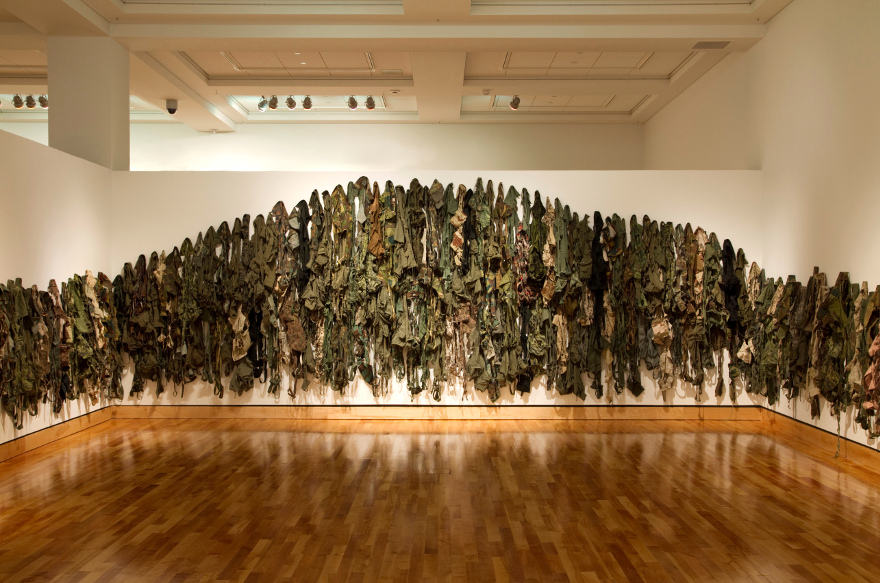
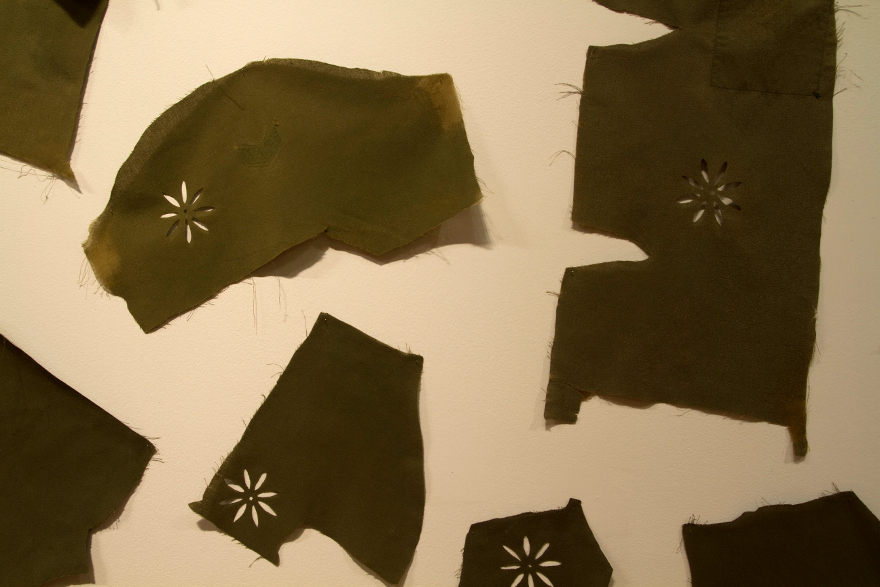
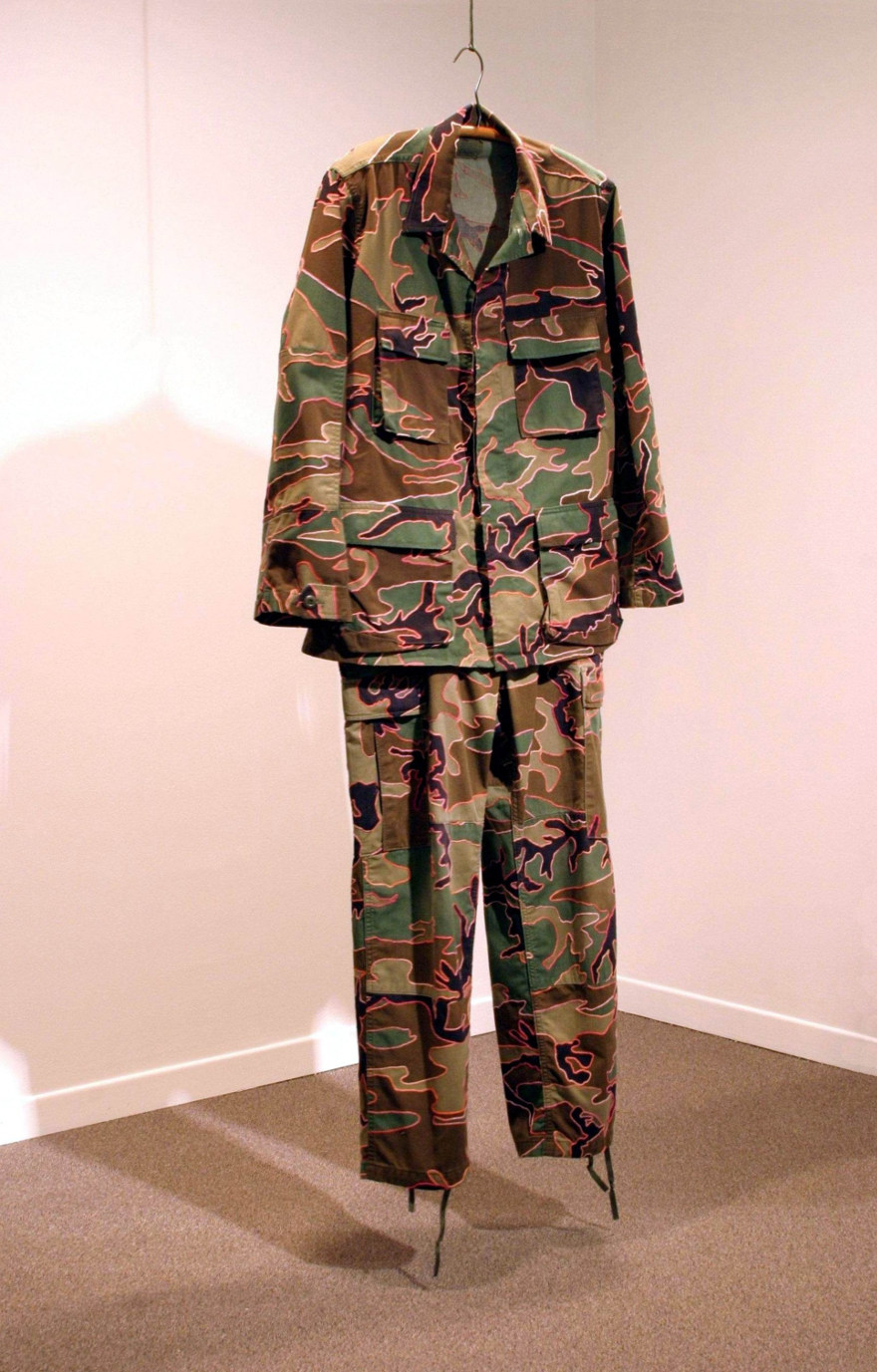
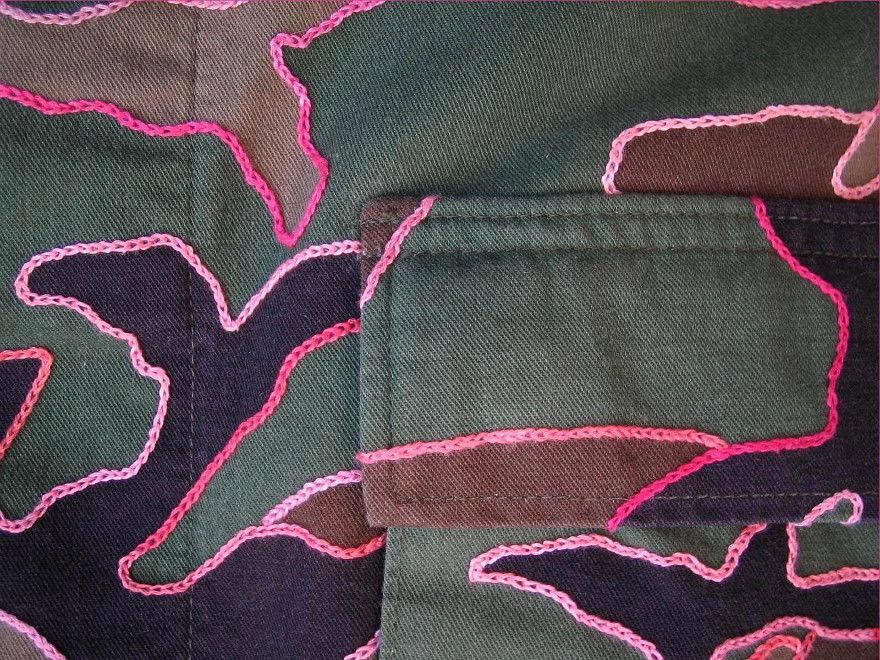
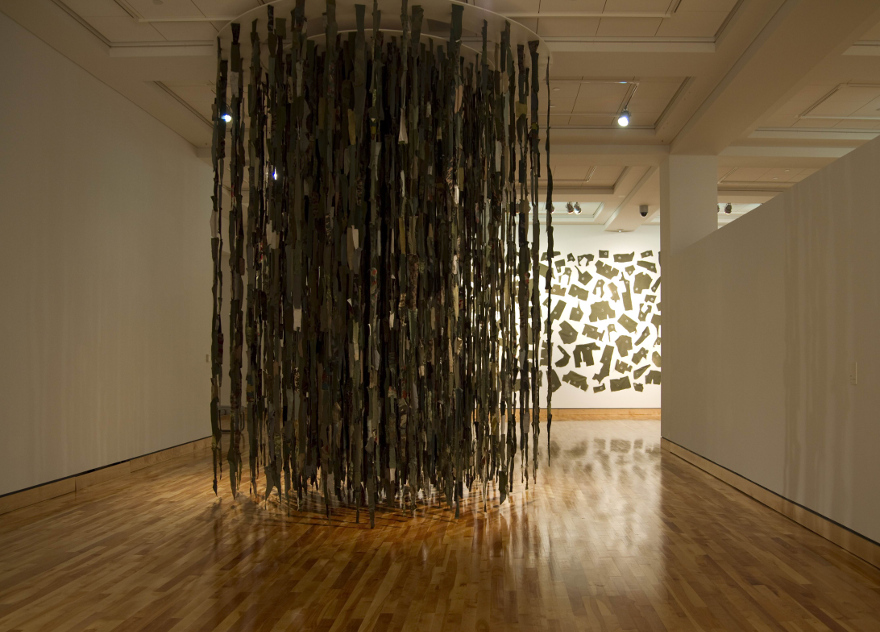
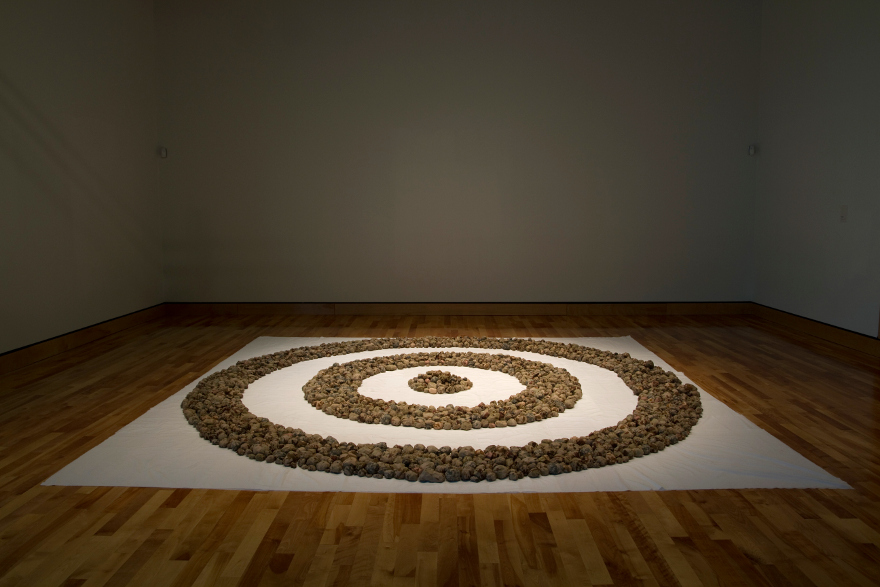
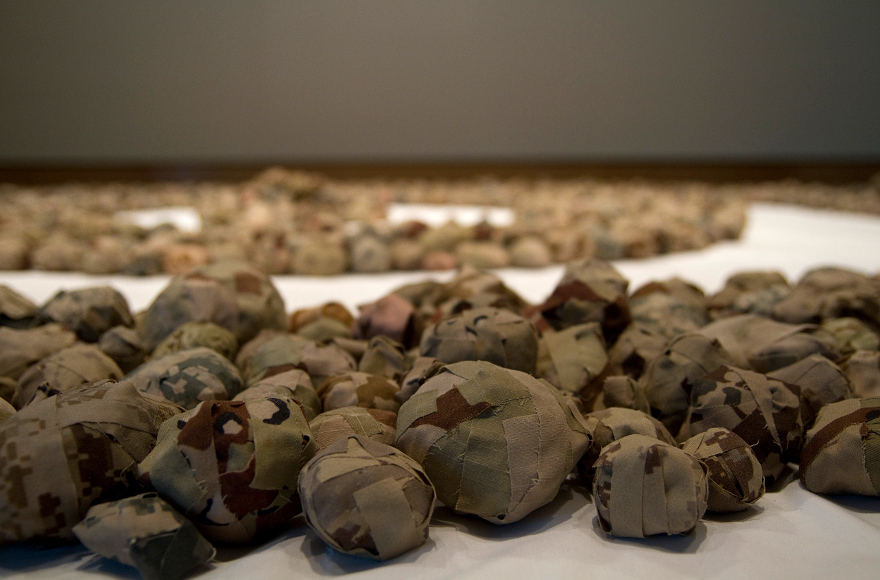
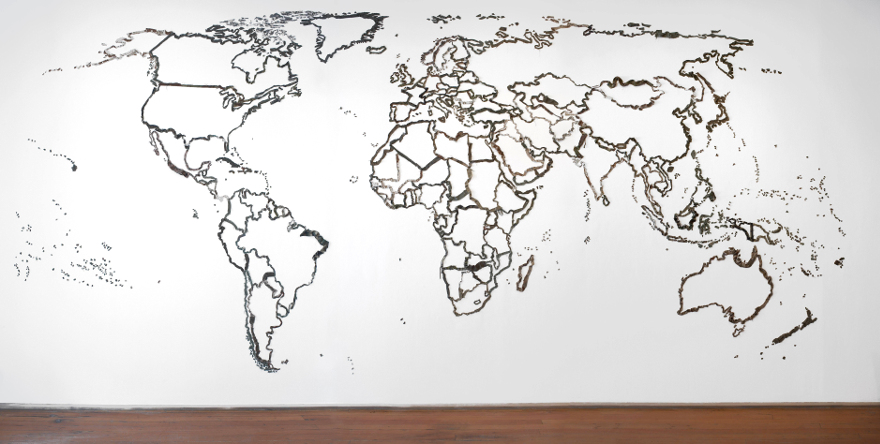
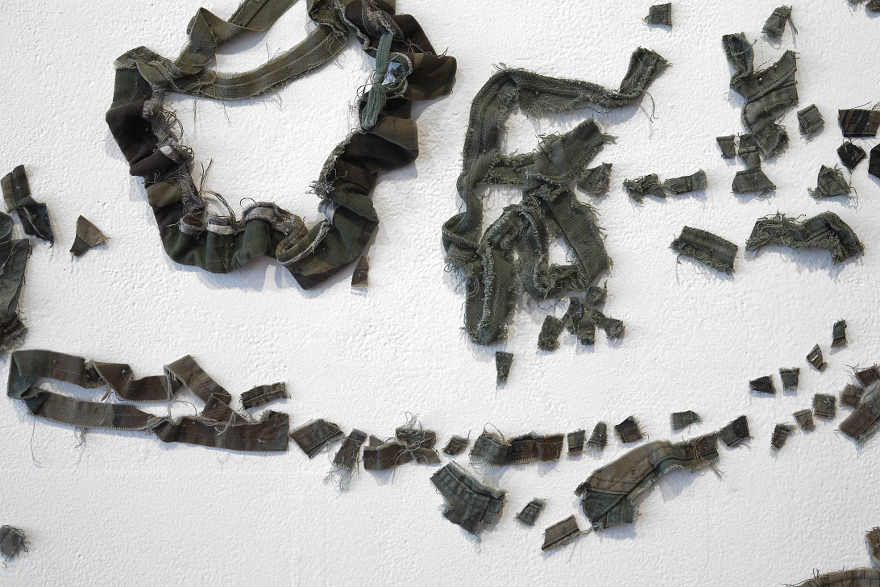
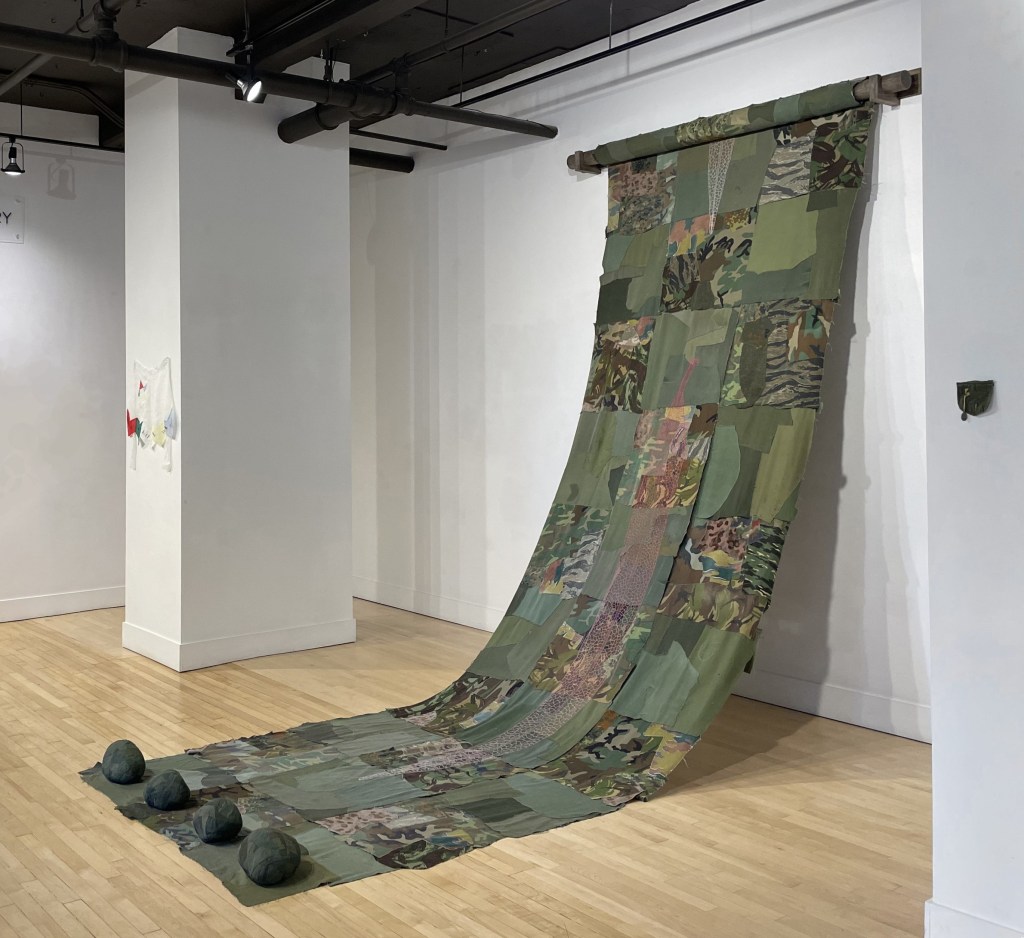
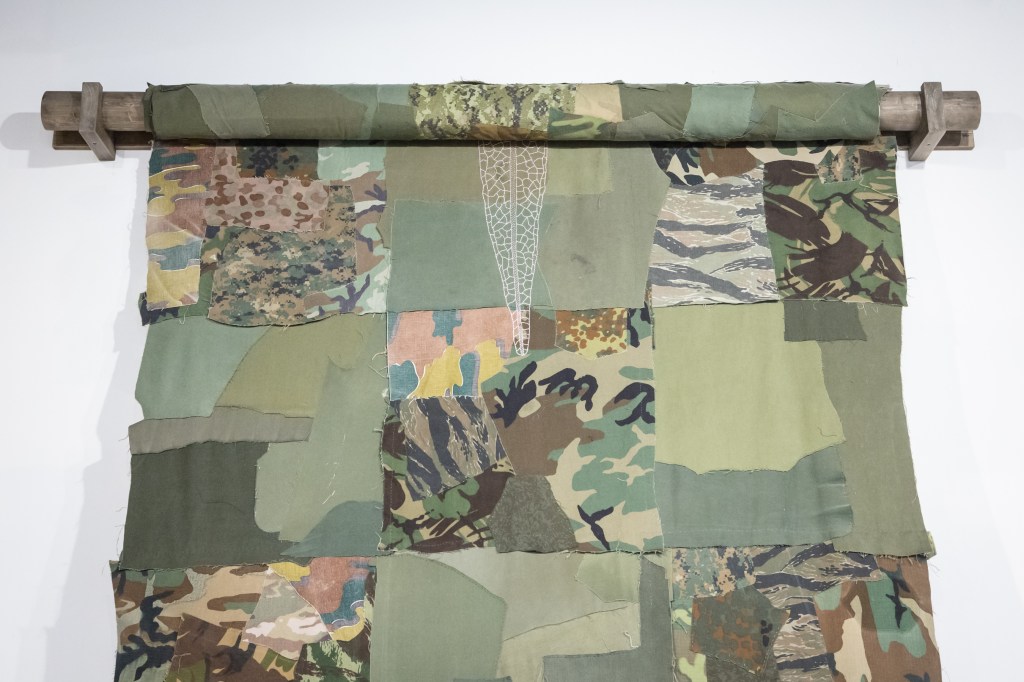
I use fabric from worn camouflage uniforms to create installations about the devastation of war. Originally designed by artists to conceal soldiers in nature, camouflage becomes, in my work, a way to metaphorically return those patterns back to nature. I often use intentionally rough craftsmanship to depict the insanity and absurdity of war. In other work, careful obsessive sewing speaks to the fragility and beauty of the human body. At a time when war is becoming highly technological, hand-sewing can re-focus attention on the personal.

Fodder, seams from worn camouflage uniforms, variable dimensions, 2004
Constellation, fabric from Canadian army uniforms worn in Bosnia, 300cm x 10m, 2010
Constellation, detail
Incarnate, Woodland camouflage uniform, embroidery thread, 155 x 70cm
Collection The Rooms Art Gallery, 2001-2004
Incarnate, detail
Rain, fabric from camouflage uniforms, 450 x 400cm diameter, 2007
Rain, detail
Target, fabric from desert camouflage uniforms, newspaper, glue, cotton, 400 x 400 cm, 2010
Target, detail
The Old Lie, seams from worn camouflage uniforms, 330 x 750 cm, 2007
The Old Lie, detail
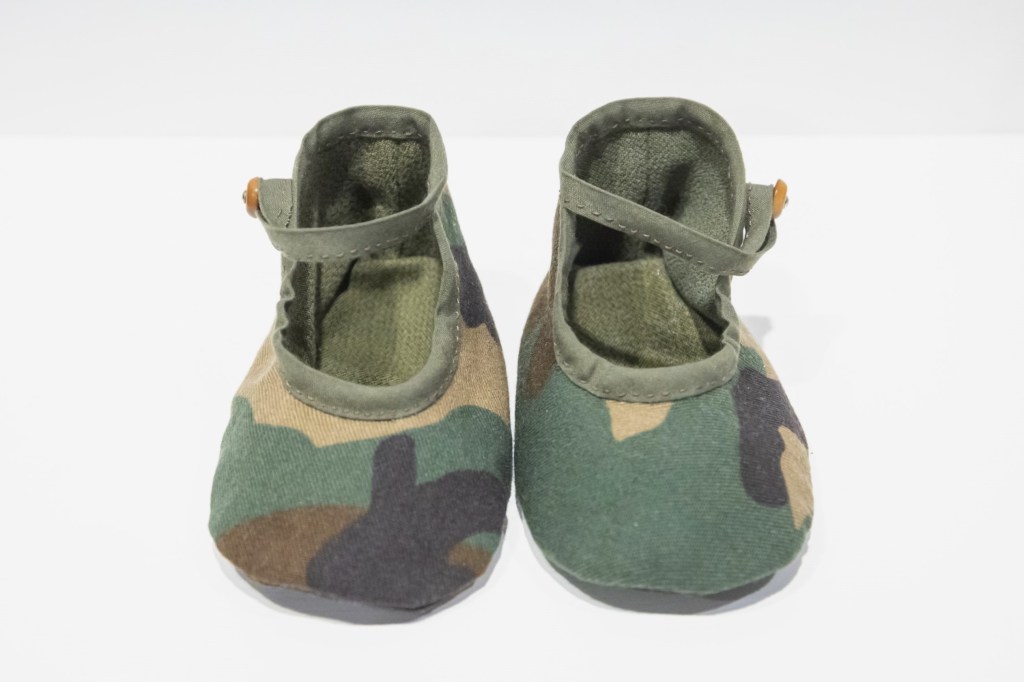
Conscript, fabric from worn army uniforms, lining fabric from Canadian uniforms worn in Bosnia, double-fold bias tape, vintage boot buttons, thread (collaboration with Dana Kletke, inspired by slippers made with World War II parachute silk by her Great-Uncle and British soldier Edward Lemoine) 13 x 15 x 5 cm, 2024
Gambit, fabric from worn camouflage army uniforms, embroidery thread, spruce wall bracket, stones, 500 x 160 cm, 2024
Gambit, detail
The birds sing so sweetly – they don’t know there’s a war going on, fabric from desert camouflage army uniforms, newspaper, white glue, 275 x 250 cm, 2024
The birds sing so sweetly – they don’t know there’s a war going on, detail

Enthrall – In Thrall

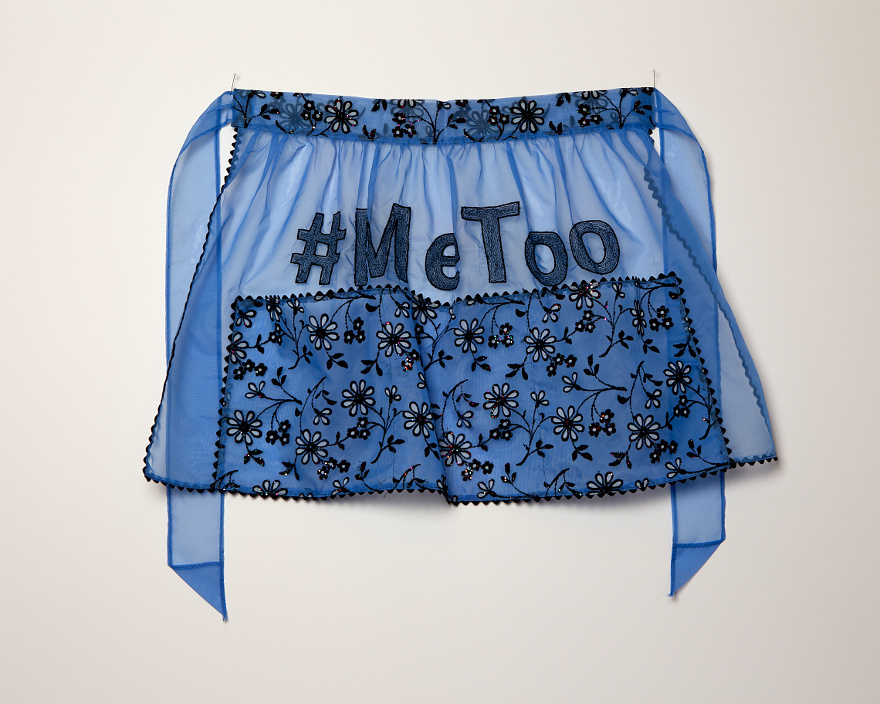
#MeToo – Tarana Burke, vintage apron, embroidery thread, 50 x 40 cm, 2018

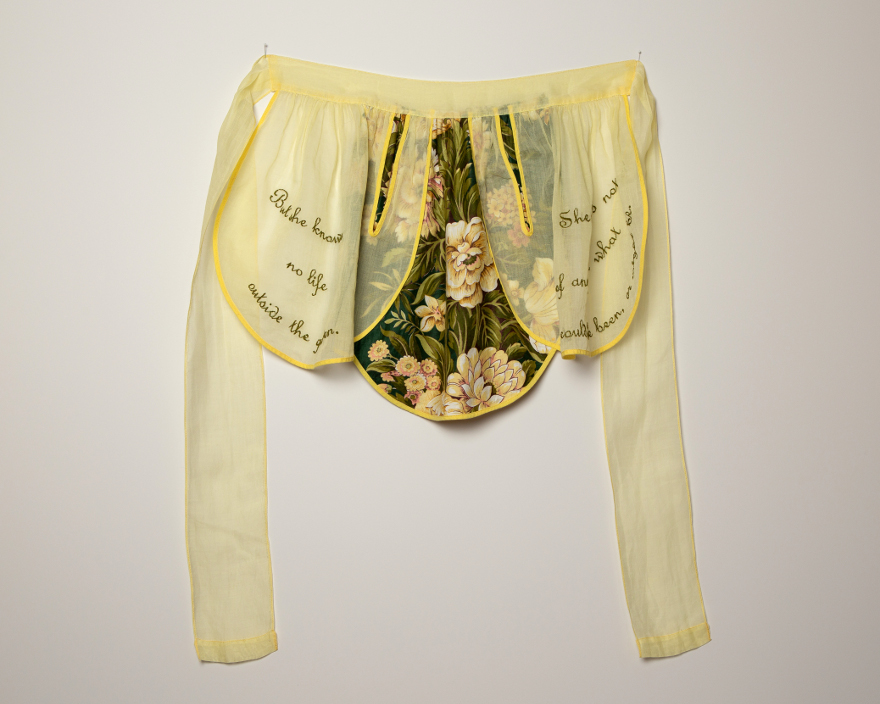
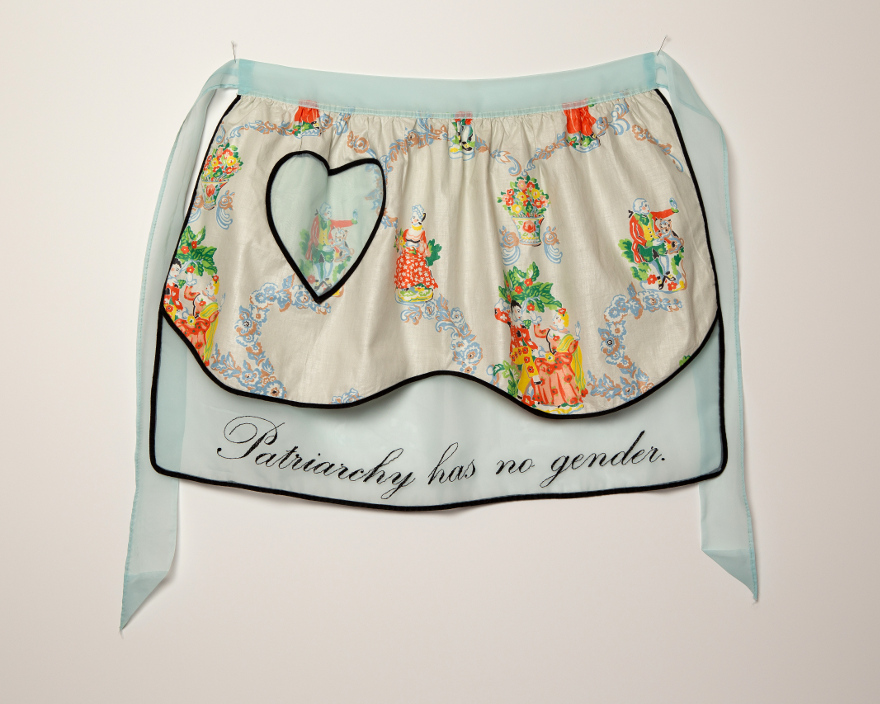
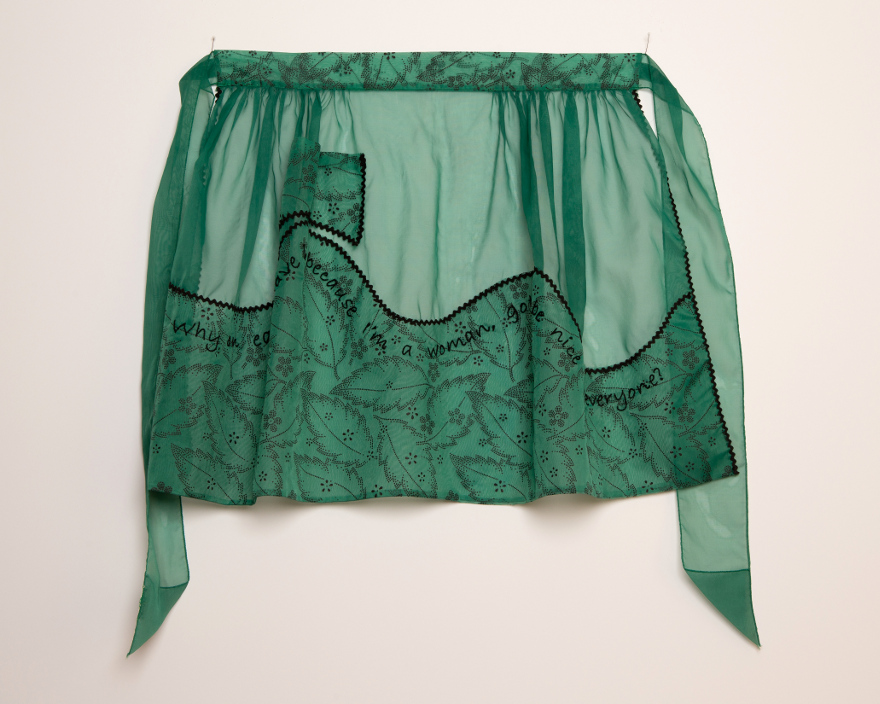
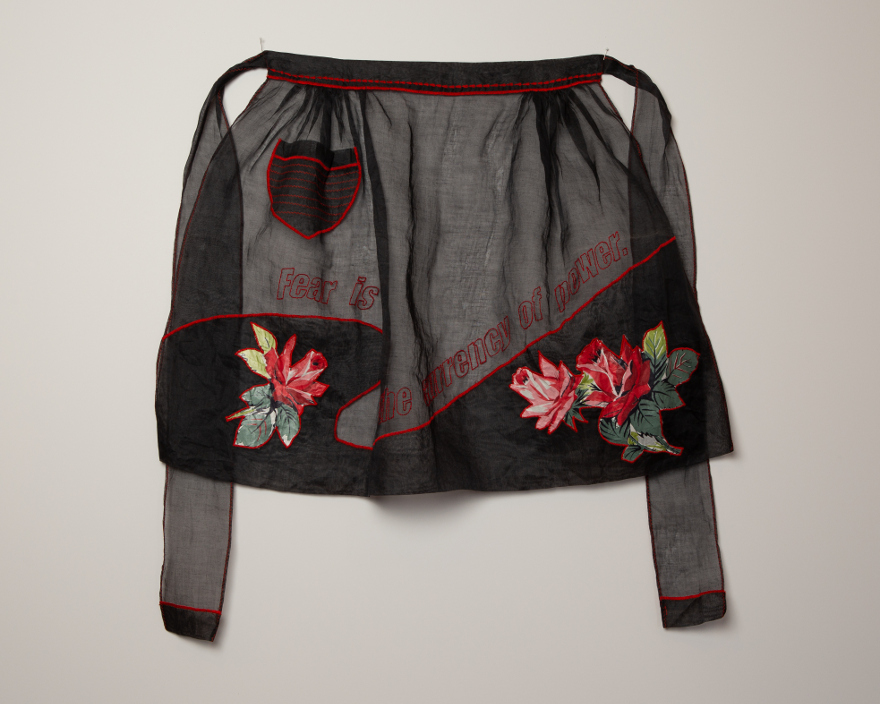
I embroider feminist and activist quotations on vintage hostess aprons, the only item I can think of that is both domestic and sexy. This seductive aspect is much like the purpose of prehistoric women’s aprons, the first human clothing. They were not practical either, being made of string with a knotted fringe. The weight of the knots would make the fringe move and sway, adding to the allure. In this series, I play with the contrast between the attractive appearance of the apron and the power of telling one’s truth.

#MeToo – Tarana Burke, detail
But she knows no life outside the garden. She has no notion of anger over what she could have been, or might be – Susan Griffin, vintage apron, embroidery thread, 60 x 40 cm, 2016
Carry on, carry on, carry on – Emily Carr, vintage apron, embroidery thread, 50 x 40 cm, 2015
Carry on, carry on, carry on – Emily Carr, detail
Fear is the currency of power – Mina Shum, vintage apron, embroidery thread, 50 x 40 cm, 2018
Patriarchy has no gender – bell hooks, vintage apron, embroidery thread, 50 x 40 cm, 2016
We grow up learning that someone is always looking at us and checking for misbehaviour – Laurie Penny, vintage apron, embroidery thread, 50 x 40 cm, 2017
Why on earth have I, because I’m a woman, got to be nice to everyone – Caitlin Moran, vintage apron, embroidery thread, 50 x 40 cm, 2017

Mirage

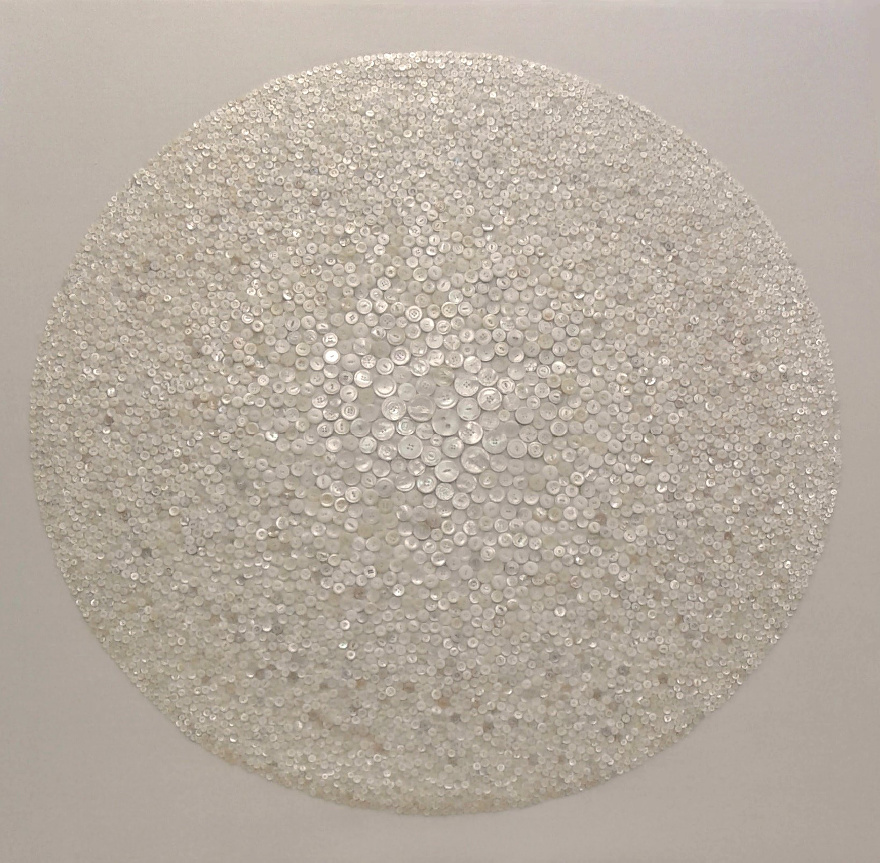
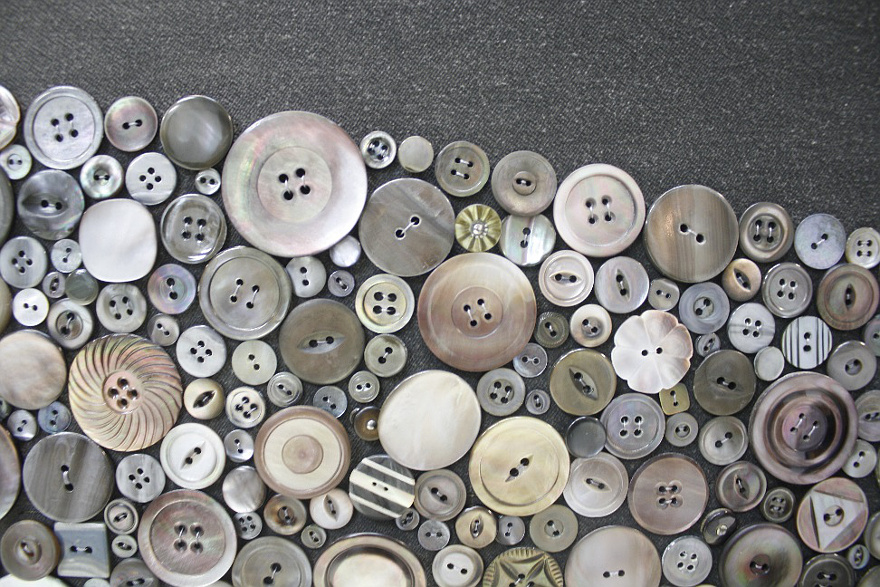
Moon, mother-of-pearl buttons, velvet, 120 x 120 cm, 2015

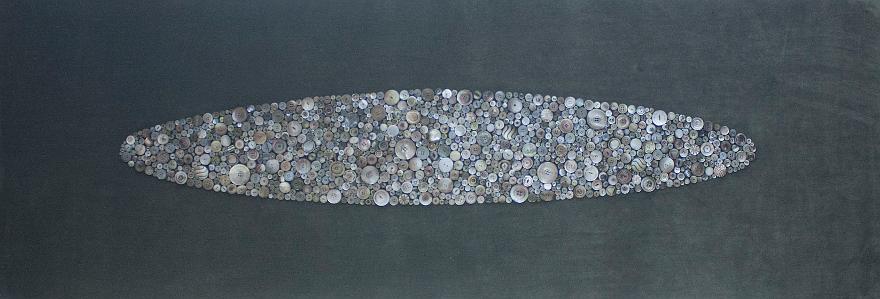
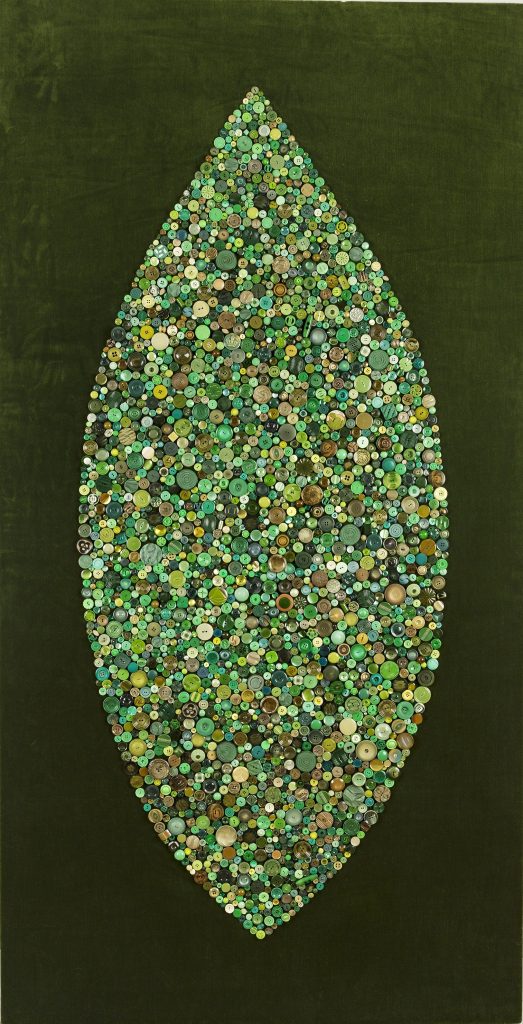
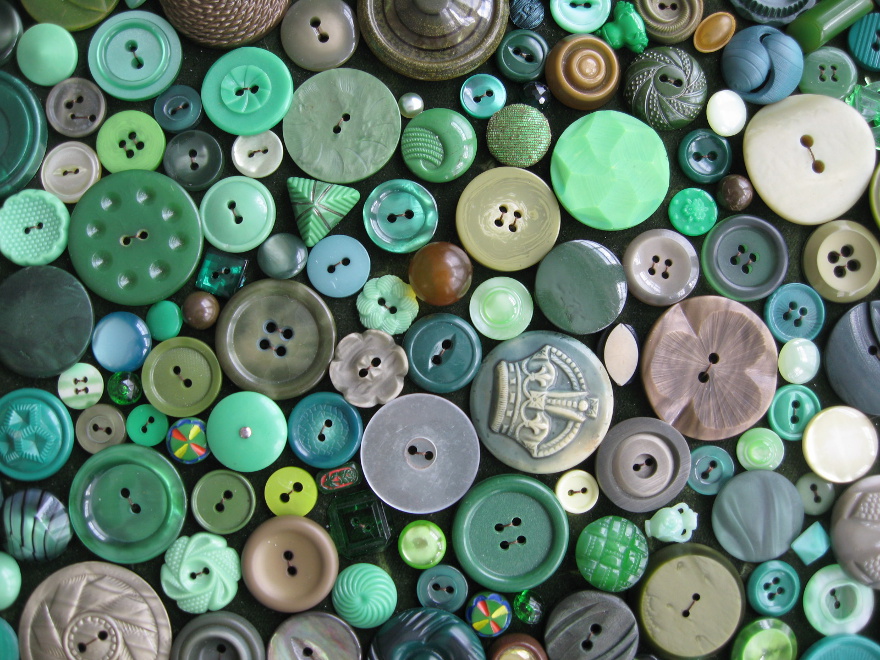
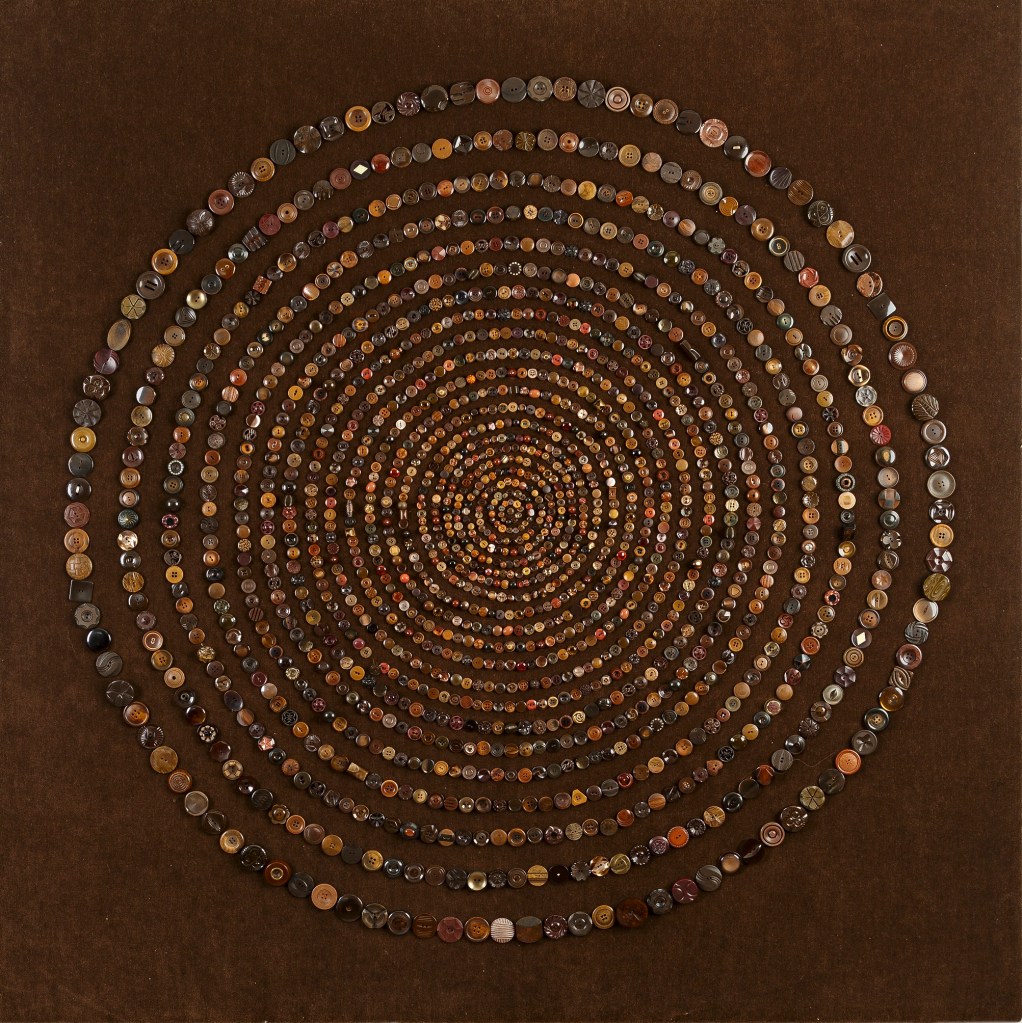
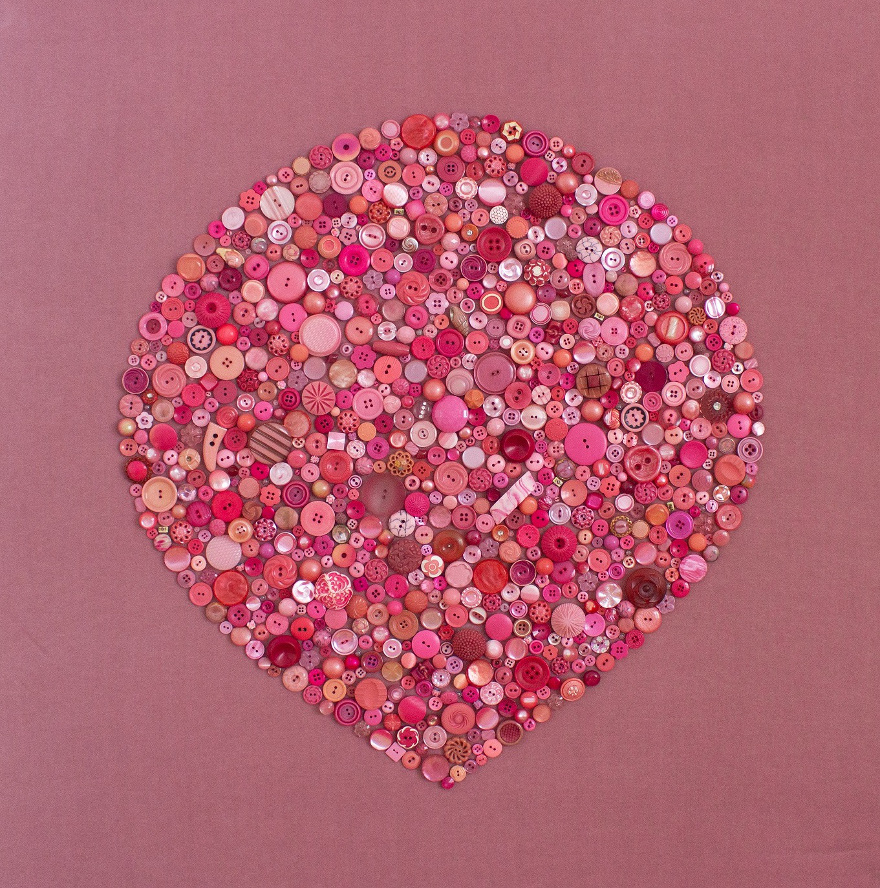
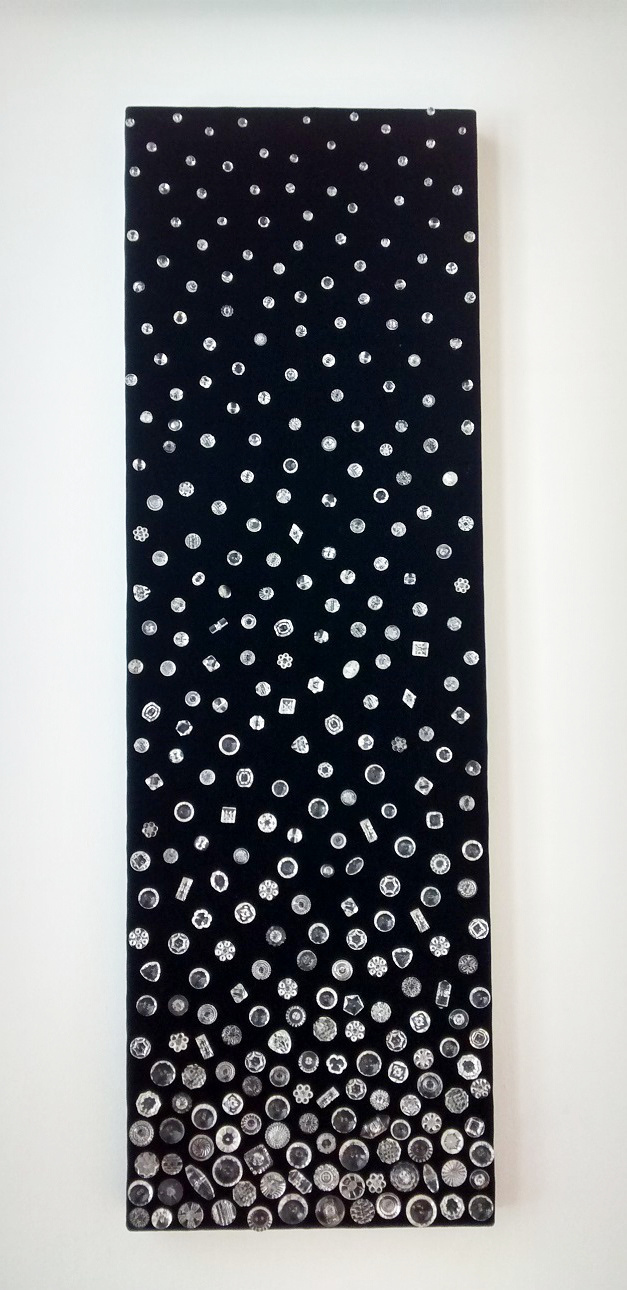
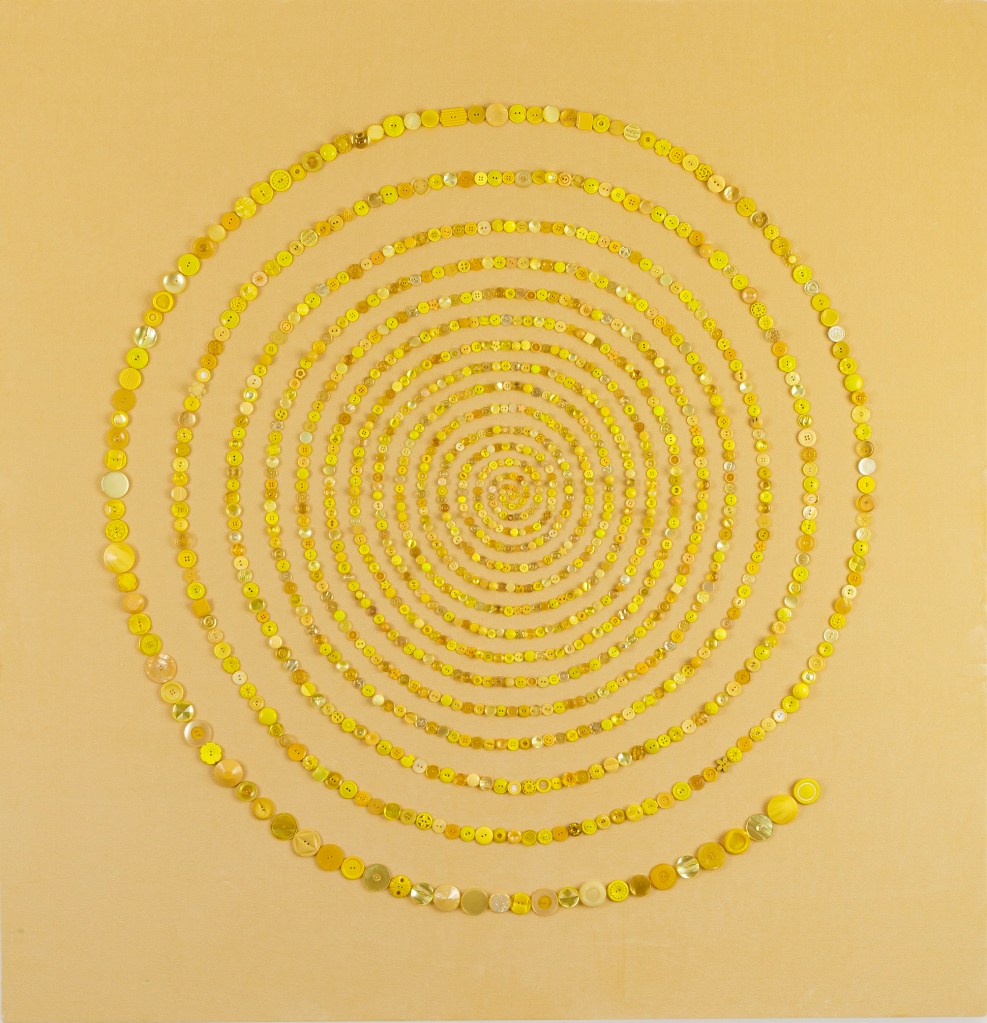
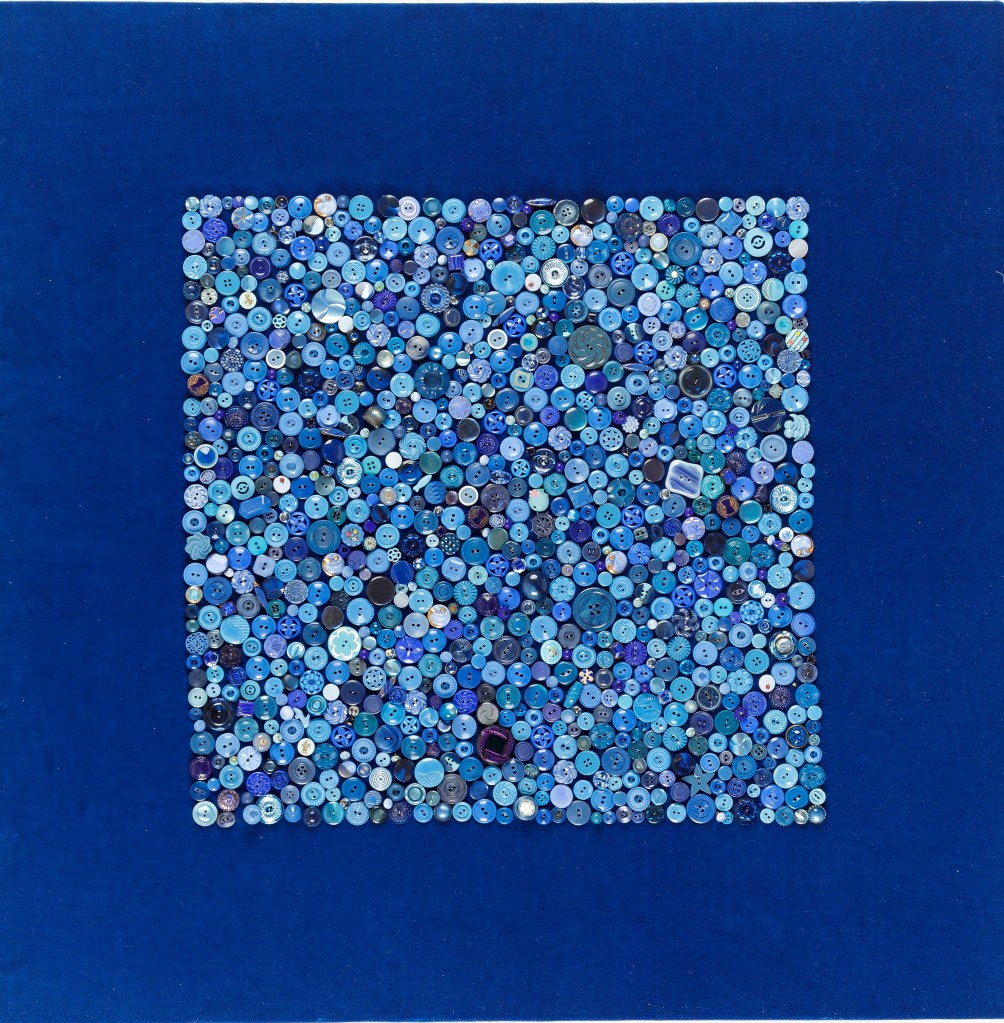
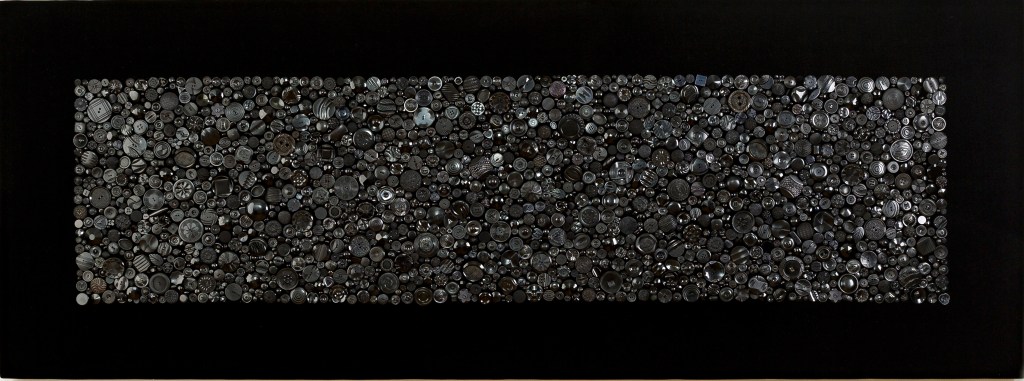
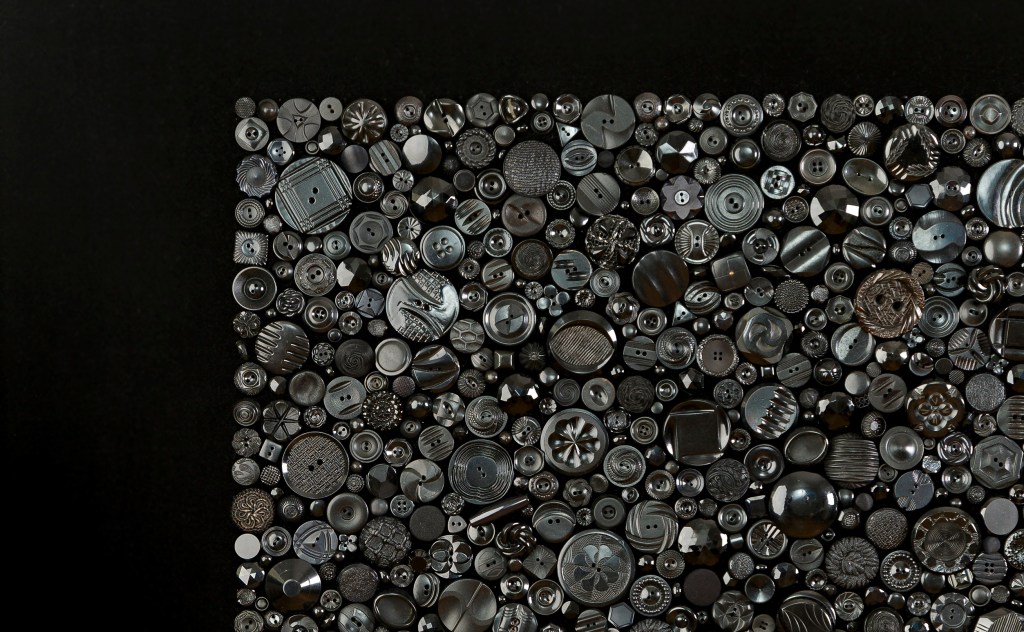
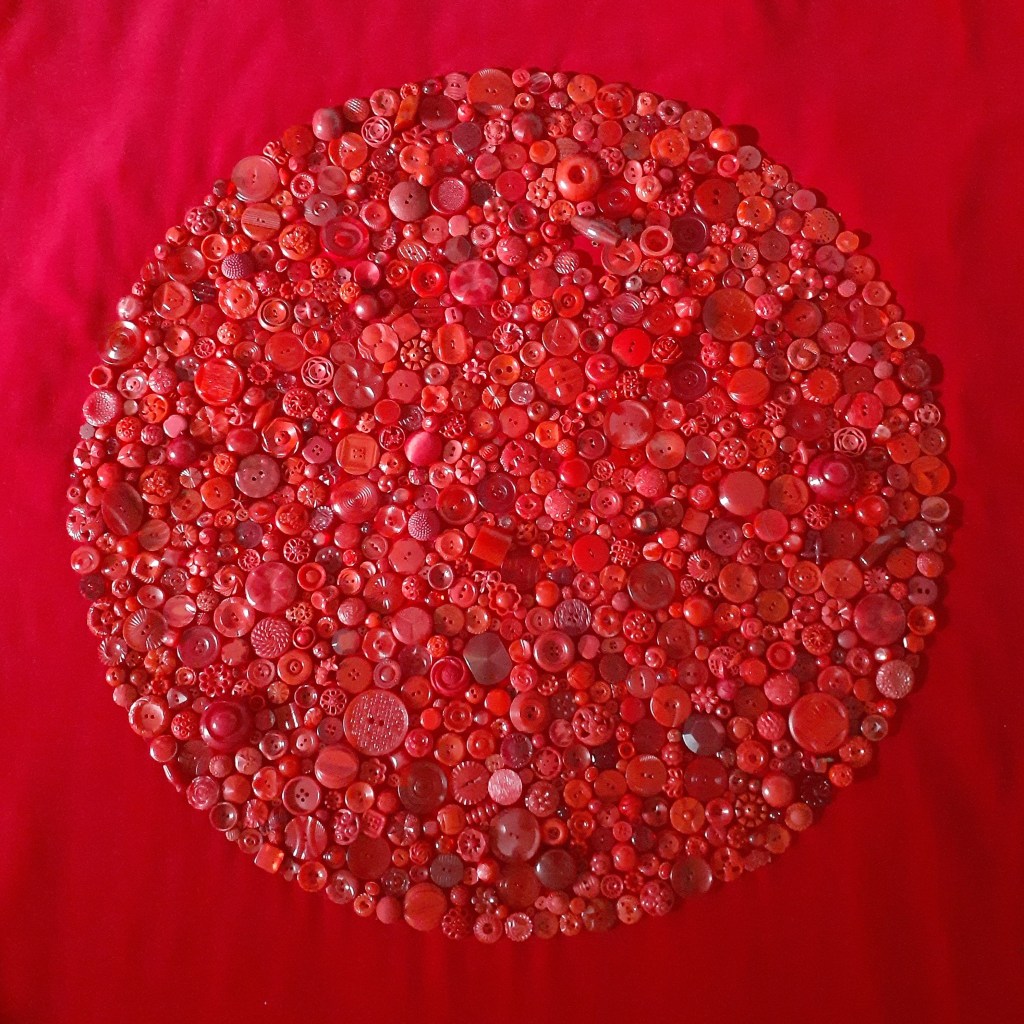
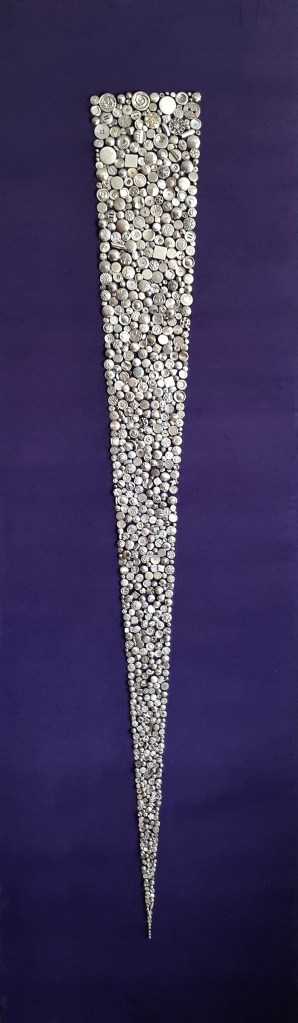
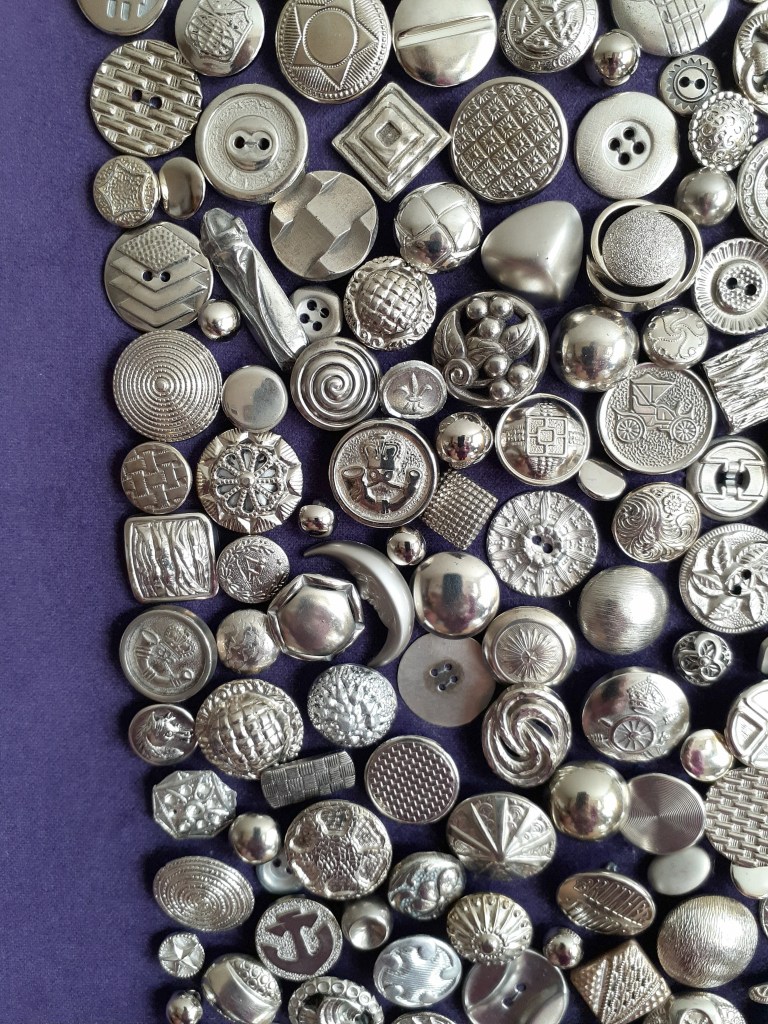
I sew vintage buttons on velvet in abstract shapes based on natural forms. The word button has its origins in nature, coming from the word ‘bud.’ Although buttons are humble objects, I appreciate their incredible diversity and history (thanks to the Prairie Button Keepers). I am particularly inspired by the Pearlies, groups of working-class families in London, England who sew mother-of-pearl buttons on their clothing. Wearing their pearly “flash” they raise money for charity, a custom they have followed for over a hundred years.

Moon, detail
Cloud, mother-of-pearl buttons, velvet, 75 x 215 cm, 2017
Cloud, detail
Leaf, vintage buttons, velvet, 240 x 110 cm, 2017
Leaf, detail
Tree Rings, vintage buttons, velvet, 110 x 110 cm, 2019
Rose, vintage buttons, velvet, 60 x 60 cm, 2019
Rain, vintage glass buttons, velvet, 100 x 40 cm, 2018
Sun, vintage buttons, velvet, 127 x 124 cm, 2018
Sky, vintage buttons, velvet, 77 x 77 cm, 2016
Night, vintage buttons, velvet, 74 x 199 cm, 2021
Night, detail
Blood, vintage buttons, velvet, 90 x 90 cm, 2023
Lightning, vintage buttons, velvet, 230 x 70 cm, 2024
Lightning, detail
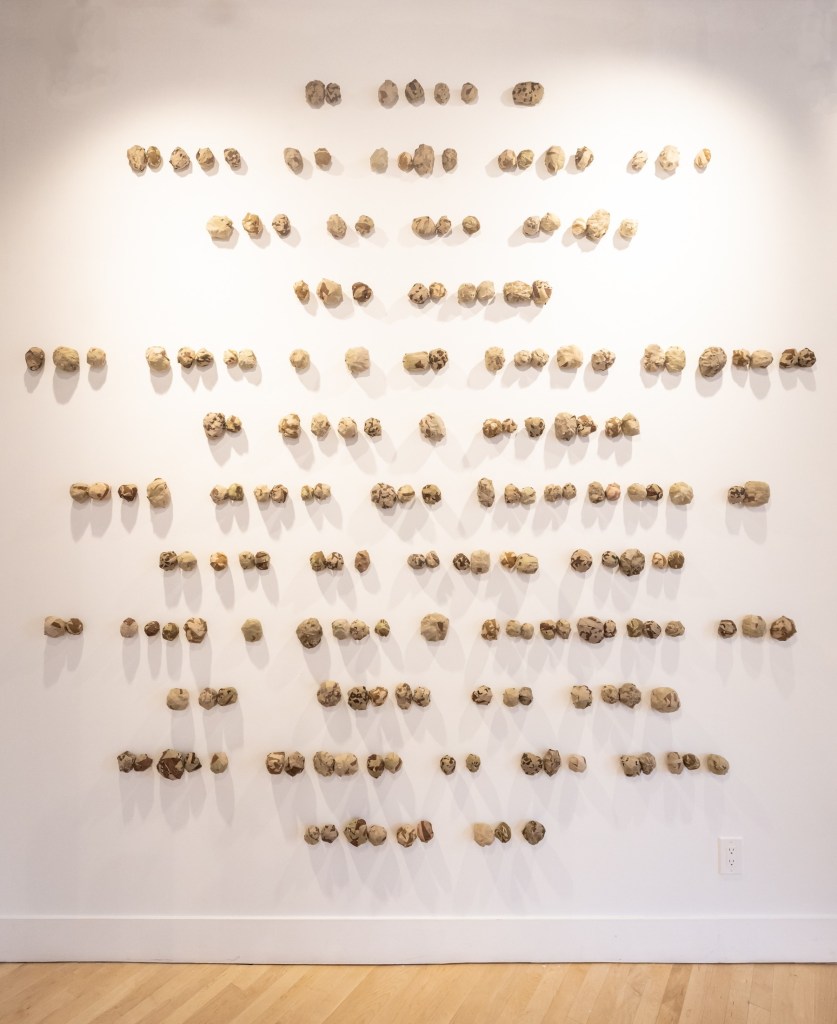
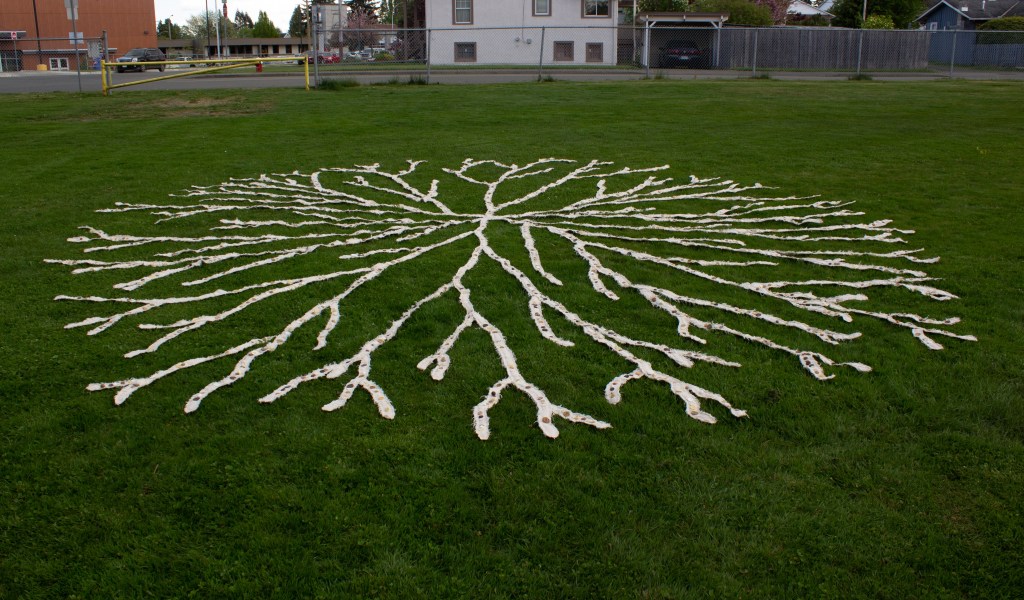
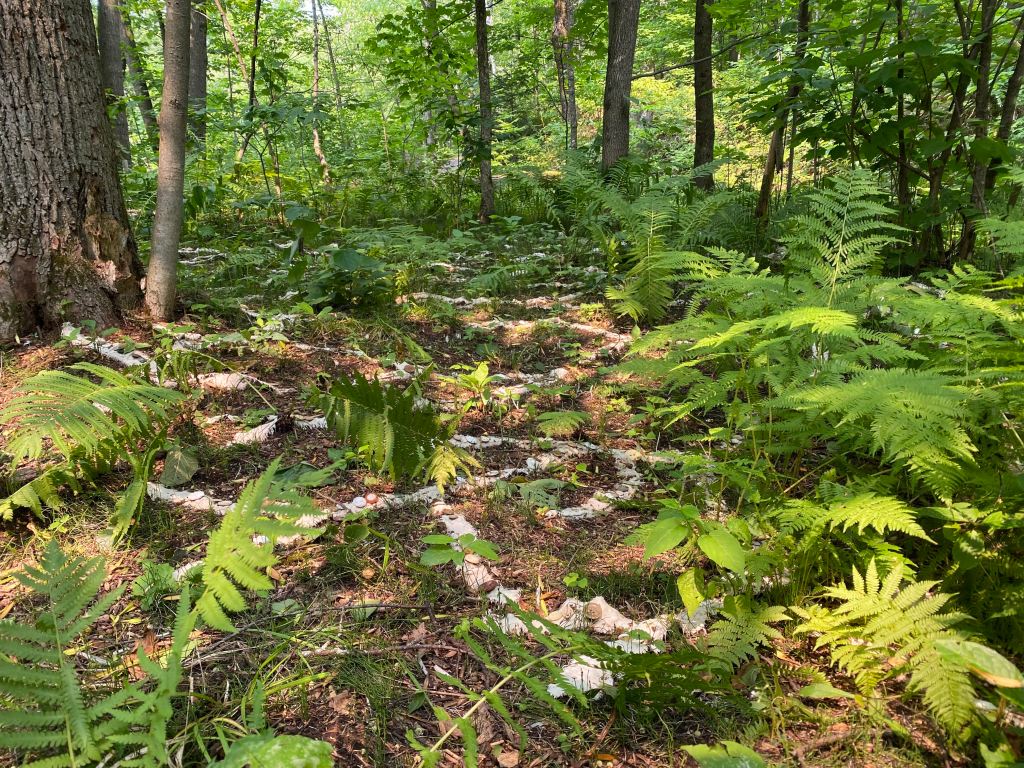
Mycelium, Harmston Park, Courtenay, BC, vintage buttons, linen, cotton, 7.5 m diameter, 2021

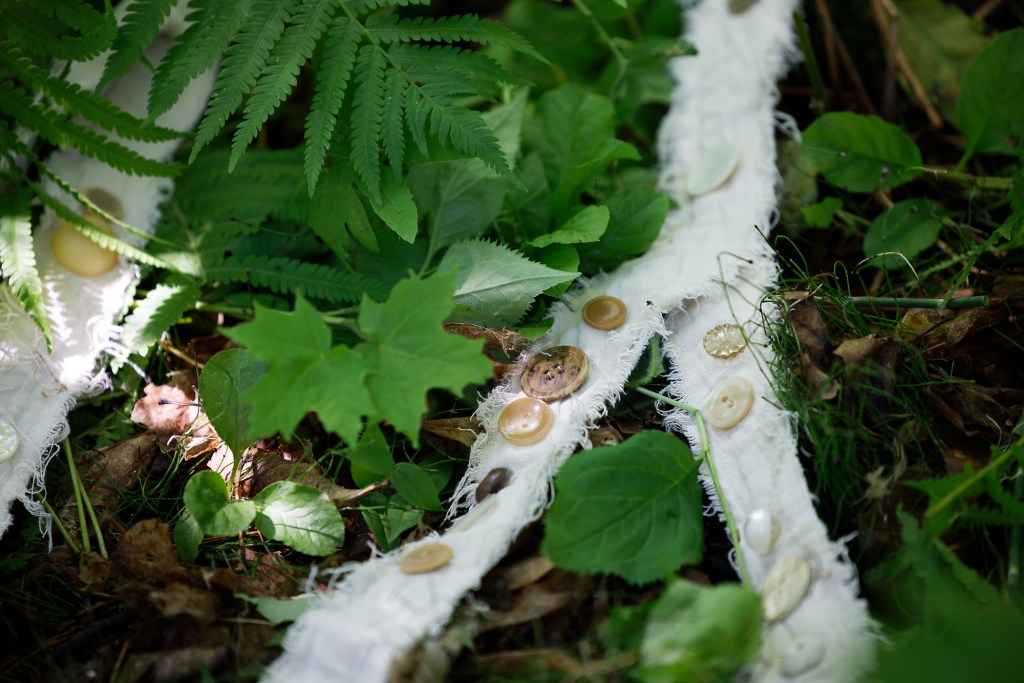
Mycelium represents the underground network that connects and symbiotically nurtures trees. Buttons spell out quotations about the environment in Morse Code.

Mycelium, onsite at the Biennale Internationale du Lin de Port Neuf, Quebec, 2021
Mycelium, detail at the end of summer